
Speech sounds & apraxia
How speech sounds develop, common patterns, and when clarity needs a closer look.
Children don’t learn all speech sounds at once. Sounds like p, b and m usually come early, while sounds like s, z, ch, l and r can take until school age. Along the way, children simplify words in predictable ways, such as saying “tat” for “cat”.
These articles explain how speech sounds develop, the common patterns speech-language pathologists call phonological processes, and childhood apraxia of speech, a motor speech disorder in which a child knows what they want to say but has trouble planning the movements to say it.
If people outside the family often have trouble understanding your child, or your child is frustrated at not being understood, an assessment can tell you whether the patterns are typical for their age.
 Speech sounds & apraxiaChildhood Apraxia of Speech: What Families Should UnderstandMay 12, 2026
 Speech sounds & apraxiaSpeech Sound Development: When Each Sound Usually Comes InMay 12, 2026
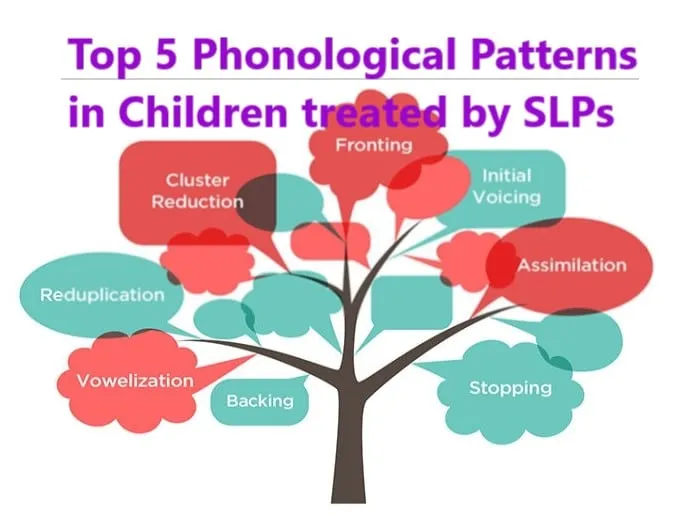 Speech sounds & apraxiaTop 5 Phonological Patterns in Children treated by SLPsJanuary 10, 2025
Related services
- Speech sound disorders: articulation and phonologySupport for children who are hard to understand or who mispronounce sounds past the typical age, in English, French and the other languages of your home.
- Childhood apraxia of speechCareful assessment and frequent, movement-focused therapy for children who have difficulty planning and sequencing the movements of speech.
Let's talk about what you're noticing.
No referral needed. Call the clinic or send us a request, and we'll match you with the right clinician.