Signs to look for
- Your child says the same word differently each time they try
- Vowel sounds are often distorted, not only consonants
- Your child seems to search or grope with their mouth before or while speaking
- Longer words are much harder than short ones, and sounds or syllables come out in the wrong order
- Speech sounds choppy or has unusual stress and rhythm
- Words come out more clearly in routines or songs than when your child tries to copy you
- Your child understands much more than they can say and gets frustrated when not understood
- Your child babbled little as a baby and was late to say first words
What it is
Childhood apraxia of speech, often called CAS or verbal dyspraxia, is a motor speech disorder. Your child knows what they want to say, but the brain has difficulty planning and sequencing the precise movements of the lips, tongue and jaw needed to say it. The muscles themselves are not weak. The difficulty lies in the plan.
Because the plan is not stable, the same word can come out differently from one attempt to the next. Short, familiar words are usually easier than longer or new ones. Speech can sound choppy, with unusual stress on syllables. Many children with CAS understand language well for their age, which makes the gap between what they know and what they can say especially frustrating.
CAS is much less common than other speech sound difficulties. It is not caused by anything a parent did or did not do. In most children no specific cause is found, although CAS sometimes occurs alongside other medical, genetic or developmental conditions.
How it differs from other speech sound disorders
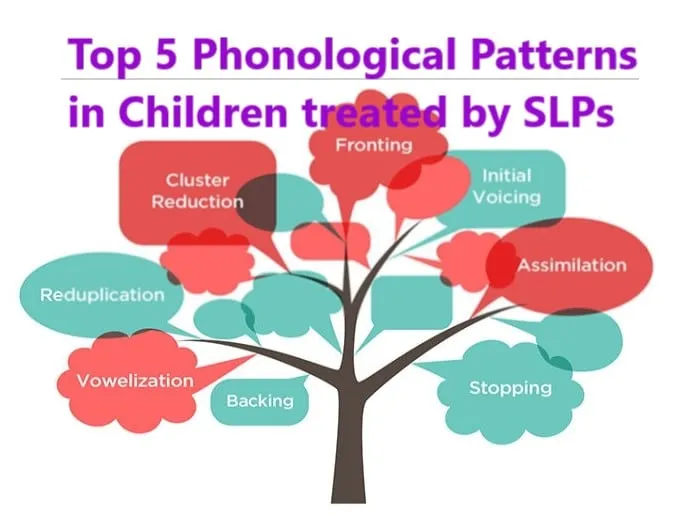
Most children who are hard to understand have an articulation or phonological disorder. Their errors tend to be consistent and follow predictable patterns. In CAS, errors are less predictable, vowels are often affected, transitions between sounds and syllables are effortful, and the rhythm of speech is often different. No single sign confirms CAS. Clinicians look for a cluster of these features across many tasks.
Who we see
We mainly see toddlers, preschoolers and school-age children who have very few words, who are much harder to understand than expected, or whose speech is not progressing with general speech therapy. Some families come with a diagnosis from another professional and want ongoing therapy. Others have heard the word apraxia and want a careful opinion.
How we assess it
We are conservative about diagnosing CAS, particularly in young children. It is difficult to confirm before about age 3, because a child needs enough speech for the pattern to be clear, and some of its features also appear in other speech difficulties.
The assessment usually includes:
- a detailed conversation with you about early sounds, babbling, feeding, development and family history
- observation of your child’s speech in play, in naming, and in repeating sounds, syllables and words of increasing length
- repeating the same words several times to look at consistency
- an examination of the structure and movement of the mouth, to rule out weakness or structural causes
- a look at your child’s understanding and use of language, since these are often stronger or weaker than speech
We may also recommend a hearing assessment. In a young child, we may describe the profile as suspected CAS and confirm or revise it over a period of therapy. This is careful practice, not uncertainty. Learn more about our assessment process.
How therapy works at VoxLingue
Therapy for CAS focuses on movement. Your child practises the transitions between sounds and syllables, not sounds in isolation. Research and clinical guidelines point to a few key principles.
Frequent, focused practice
Children with CAS generally progress better with frequent sessions and many practice attempts per session. Short, regular sessions, often more than once a week in the early stages, tend to work better than occasional long ones. We discuss a realistic schedule with you based on your child’s needs and your family’s life.
Motor-based approaches
Our clinicians draw on approaches designed for motor speech, such as Dynamic Temporal and Tactile Cueing (DTTC), in which the clinician and child say words together, slowly at first, with visual and touch cues that are gradually faded. Other approaches, such as Rapid Syllable Transition Treatment (ReST), may be used for older children depending on their profile. The choice depends on your child’s age, severity and needs.
Words that matter
We choose a small set of practice words that are useful in your child’s life: names of family members, favourite foods, “more”, “help”, “mine”. Sessions are play-based for young children, with lots of repetition hidden inside games.
Communication now, not later
While speech develops, we often introduce signs, gestures, pictures or a speech-generating device so your child can communicate today. This does not replace speech. Research shows that augmentative and alternative communication does not stop speech from developing. See our page on AAC.
Your role at home
You are your child’s most important communication partner, not a second therapist. We coach you on how to support practice in a few short, everyday moments rather than long drills:
- Practice the target words in routines such as snack time, bath time or getting dressed.
- Respond to what your child means, then model the word clearly and slowly.
- Avoid asking your child to perform words on demand for relatives.
- Celebrate every form of communication: words, signs, gestures and device use.
- Protect time that has nothing to do with speech. CAS therapy is a long process, and your family’s energy matters.
Bilingual and multilingual families
Bilingualism does not cause CAS, and research does not support dropping a language to help a child with apraxia. Motor planning skills built in one language can support the other. We decide together which language to use for practice words, based on where and with whom your child communicates most: home, daycare, school and extended family.
Our assessment considers the languages your child actually hears and uses, so that normal differences between languages are not mistaken for errors. Our team speaks many languages, and when a clinician who speaks your home language is not available, we guide you to practice key words in that language at home.
In person or by telepractice
We offer CAS therapy in person at our Marché Central clinic in Montreal, or by telepractice anywhere in Quebec and Ontario. Telepractice can make frequent sessions more manageable for families. For young children, a parent usually sits beside the child and is coached to give some of the cues. Some families combine in-person and online sessions. We help you choose what fits your child.
Getting started
You do not need a doctor’s referral. If you are worried about your child’s speech, an assessment is a clear first step, whether or not apraxia turns out to be the answer.
Call our Marché Central clinic at 514-467-9132, or request an appointment through our contact form. Availability of specific clinicians and languages varies, and our team will match you with the right person.
Frequently asked questions
How is apraxia different from a speech delay?
In a typical speech sound delay or phonological disorder, errors are usually consistent and follow predictable patterns. In childhood apraxia of speech, the difficulty is in planning and sequencing movements, so errors tend to be inconsistent, vowels are often affected and the rhythm of speech can sound unusual. The two need different kinds of therapy, which is why careful assessment matters.
Can apraxia be diagnosed in a toddler?
It is difficult to confirm in children under about 3, because they do not yet say enough for the pattern to be clear. In young children, clinicians often describe it as suspected apraxia and confirm or revise that view over a period of therapy and observation. You do not need to wait for a confirmed diagnosis to start helping your child communicate.
Will my child learn to talk?
Most children with apraxia make meaningful progress with appropriate, consistent therapy, though progress is often slower than families first expect and can take years rather than months. We cannot predict the outcome for an individual child, but we will set clear goals with you and review them regularly.
Will using signs or a communication device stop my child from talking?
No. Research shows that augmentative and alternative communication does not stop children from developing speech, and it can reduce frustration. It gives your child a way to communicate now while we keep working on speech.
Do mouth exercises like blowing or tongue exercises help?
Current research does not support non-speech mouth exercises as a way to improve speech in apraxia. Therapy focuses on practicing the movements of speech itself, in syllables, words and phrases.
Should we stop speaking one of our languages?
No. Bilingualism does not cause apraxia, and research does not support dropping a language. We choose practice words with you so therapy fits the languages your child uses every day.
Related areas of care
- Speech sound disorders: articulation and phonologySupport for children who are hard to understand or who mispronounce sounds past the typical age, in English, French and the other languages of your home.
- Augmentative and alternative communication (AAC)Support for people whose speech does not yet meet all their communication needs, using signs, pictures or speech-generating devices alongside speech.
- Language delays and language disordersSupport for children and teens who have difficulty understanding or using language, from late talkers to school-age developmental language disorder.
- Speech and language assessment for children, teens and adultsA careful look at speech, language, voice, fluency or swallowing to find out whether you or your child can benefit from speech-language therapy, and what would help most.