
Babies, toddlers and school-age children
Speech therapy for children
Clinically reviewed by Kimberly Martins, M.A. CCC-SLP
From first words to reading and writing, our speech-language pathologists help children communicate with confidence. We work with your family in English, French and other languages, in person at our Montréal clinic, at home, or online across Quebec and Ontario.
When to talk to a speech-language pathologist
- Your child understands or says fewer words than other children their age, or isn't combining words by about age 2
- People outside the family find your child hard to understand
- Your child repeats or stretches sounds, or struggles to get words out
- Your child has trouble following instructions, telling a story or making friends
- Reading, spelling or writing is a struggle at school
- You have concerns about feeding, swallowing or how your baby uses their mouth
Trust your instincts: you don't need a referral, and an assessment can answer your questions early.
What we help children with
How we can help
How therapy works for children
- Sessions are built around play and your child's interests, so practice feels like fun.
- Parents are part of every step: you see what we do and leave with ideas for home.
- With your permission, we can share reports and strategies with your child's daycare or school.
- Bilingual children are assessed and supported in all of their languages.
Articles for parents
 Baby feeding milestones, 0 to 12 months: how your baby's mouth learns to eatOctober 15, 2026
 Waiting for speech therapy in Québec: what happens on the list and what to do meanwhileOctober 13, 2026
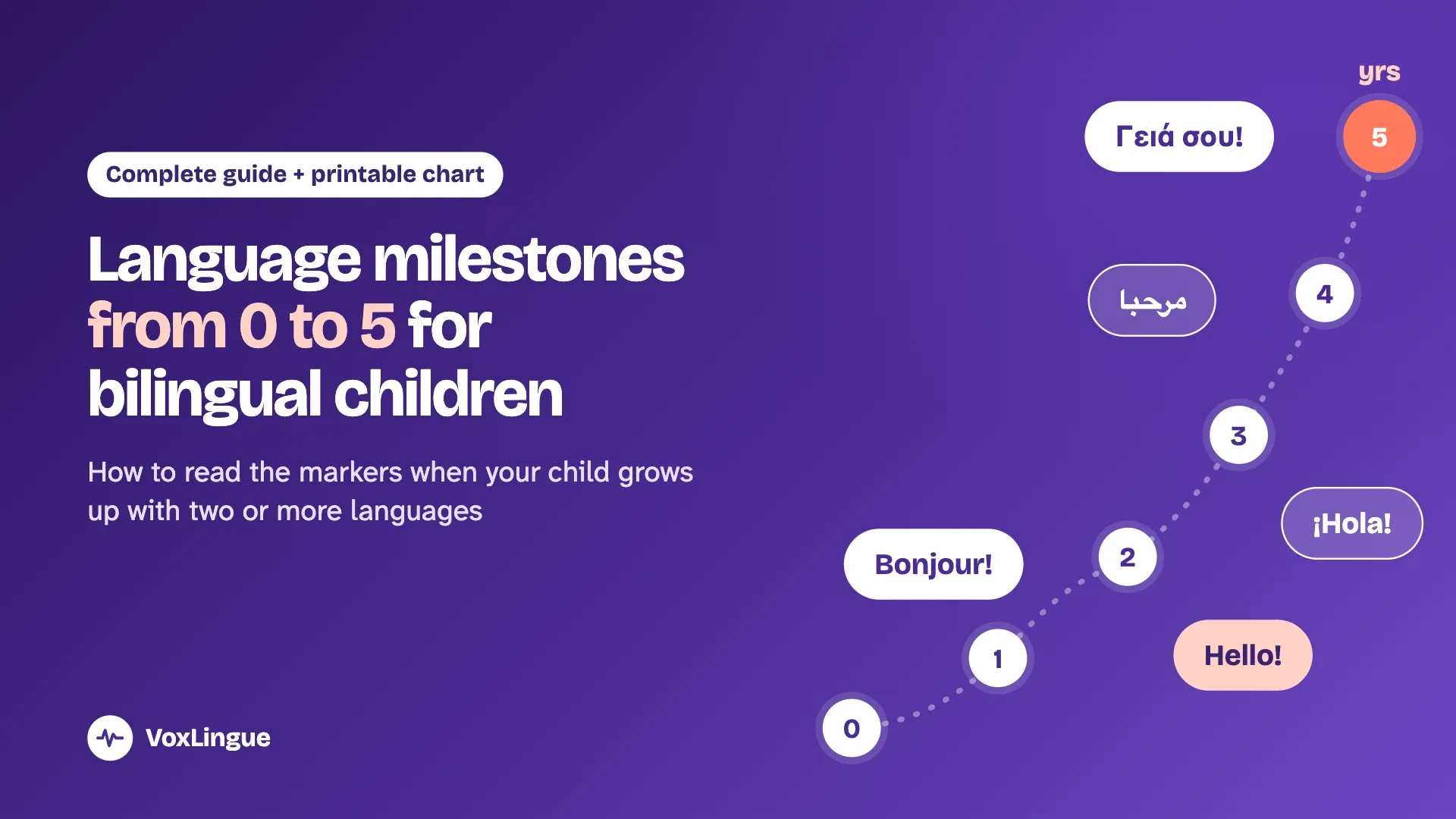 Language milestones from 0 to 5 for bilingual children (complete guide and printable chart)October 11, 2026
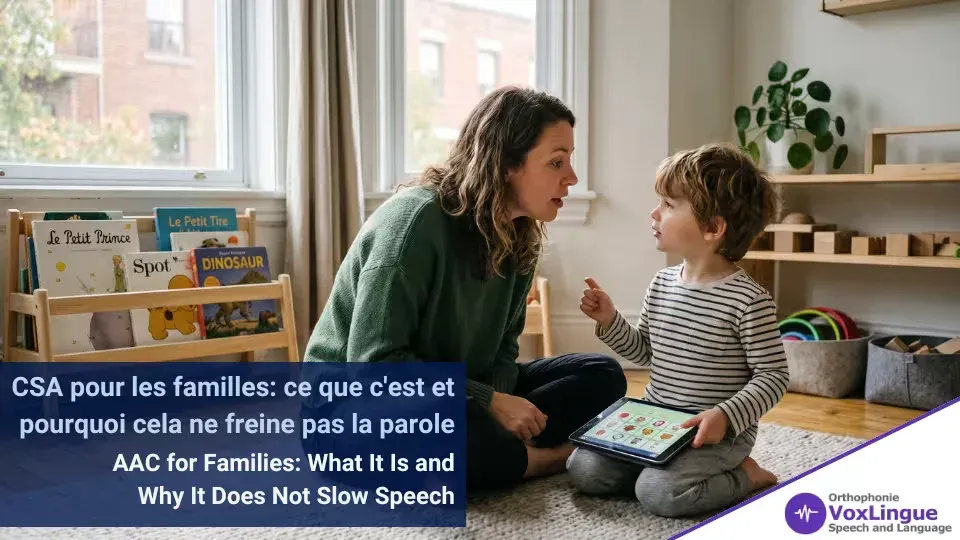 AAC for Families: What It Is and Why It Does Not Slow SpeechJuly 4, 2026
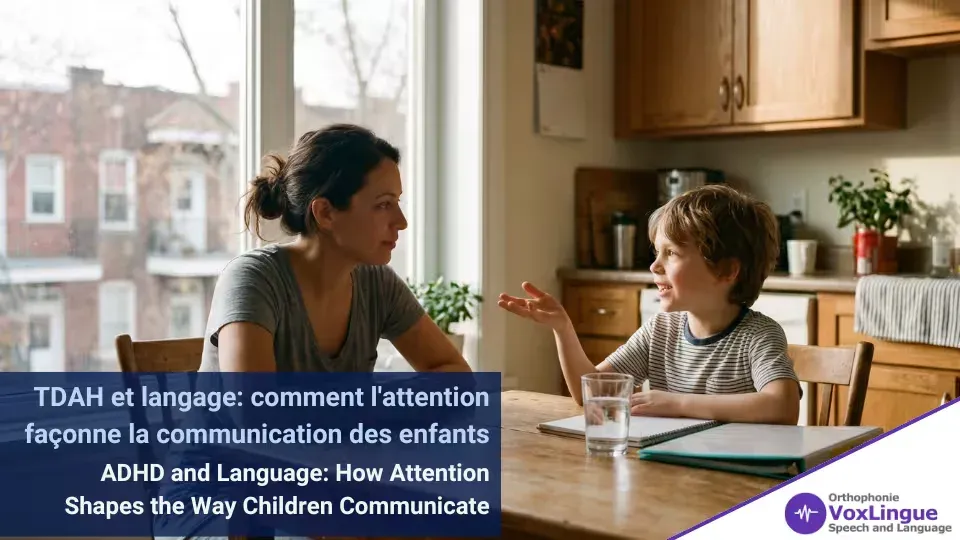 ADHD and Language: How Attention Shapes the Way Children CommunicateMay 12, 2026
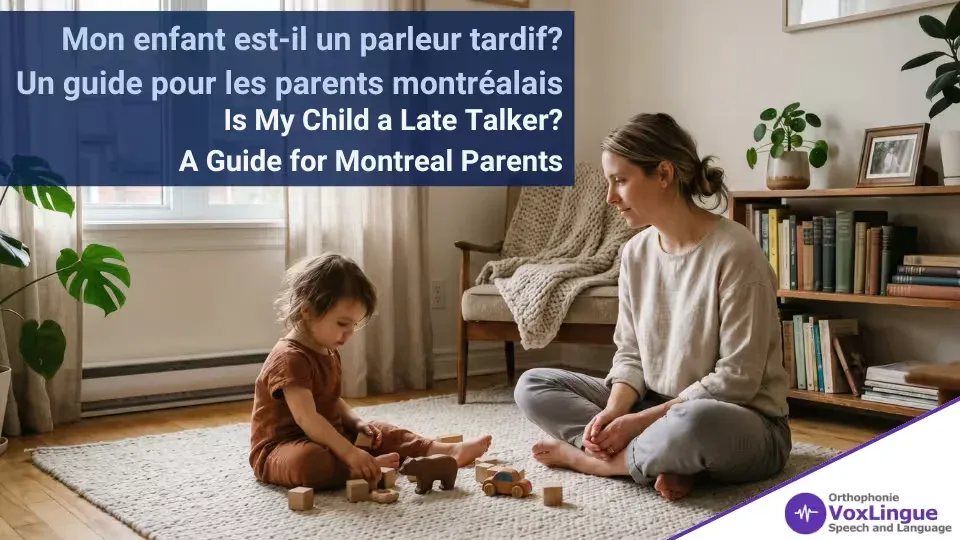 Is My Child a Late Talker? A Guide for Montreal ParentsMay 12, 2026
Common questions
At what age can my child start speech therapy?
At any age. We see babies for feeding and oral function, toddlers for early language, and children and teens for speech, language, stuttering and literacy. If you're unsure, an assessment is a good first step.
Do I need a referral from a doctor?
No. You can contact us directly. We provide receipts for private insurance.
Can a young child really do therapy online?
Often, yes, especially with a parent nearby. For toddlers, online sessions usually focus on coaching the parent during play, which is a well-established way to support early language.
My child is bilingual. Should we use only one language?
No. A strong home language supports learning a second one. Your clinician will look at all of your child's languages and plan therapy around them.
Do you offer sessions at home?
Yes, in-home sessions are available. Ask us whether we serve your area.
Let's talk about what you're noticing.
No referral needed. Call the clinic or send us a request, and we'll match you with the right clinician.