Côte Saint Luc is a community where families feel connected, supported, and welcomed. The city is known for its warm atmosphere and its strong sense of belonging, which is something many families appreciate when raising young children. Its parks, libraries, cultural centers, and year round family programs create an environment filled with natural opportunities for children to explore language and communication through everyday interactions.
One of the most distinctive features of Côte Saint Luc is its multilingual population. Children often hear more than one language in their homes and schools, and even during simple outings to local shops or community activities. For many families this is a meaningful part of daily life. Research consistently shows that children who grow up in environments with more than one language develop rich cognitive and social skills. These children experience constant exposure to new vocabulary, new routines, and new communication styles, all of which help strengthen their overall language development.
Language grows best in settings where children feel safe, engaged, and surrounded by communication opportunities. Côte Saint Luc naturally offers these moments. A morning at the Eleanor London Côte Saint Luc Public Library, an afternoon at a local playground, or a visit to a community event can all spark storytelling, vocabulary building, and meaningful conversations between children and caregivers. For many families, these everyday experiences become the foundation for healthy communication growth.

By understanding how the community around you supports early language development, it becomes easier to notice the small but important ways children learn to express themselves. This introduction is meant to help you appreciate how Côte Saint Luc provides a nurturing setting for communication and to offer insights that support families seeking reliable information about speech and language development.
Côte Saint Luc is a place where many children grow up hearing and using more than one language. This multilingual environment is part of the daily fabric of the community. Children may hear one language at home, another in school, and a mix of languages during activities or interactions in public spaces. This rich exposure shapes the way communication develops and offers many unique advantages.
Research in child language development shows that multilingual environments provide children with frequent opportunities to compare sounds, words, and structures across languages. This supports cognitive flexibility, problem solving skills, and social awareness. Children who grow up with more than one language learn to adapt to different communication partners and settings, which strengthens their ability to understand perspective and communicate clearly in various situations.
Families sometimes worry that hearing or using multiple languages might confuse a child or slow down their development. Current evidence tells a very different story. Children are capable of learning several languages at once, and this process does not overwhelm them. Instead, it encourages strong attentional skills and supports early learning. Multilingual children may mix languages at times or prefer one language for certain activities, which is a normal part of development and not a sign of difficulty.

At the same time, multilingual environments can make it harder for families to know when a true communication concern is present. A child may appear stronger in one language than another, or their vocabulary may be distributed across both languages. These patterns are expected and typical, yet they can lead parents to wonder whether their child needs further support. This is why clear educational resources and evidence based information are so important. Understanding what is typical in multilingual development helps families feel more confident in observing their child’s progress.
For families who want to learn more about how bilingualism influences speech and language growth, the article on bilingual language development offers helpful explanations and research based insights. You can read it here:
Bilingualism speech and language development and other languages.
Côte Saint Luc offers many spaces where children can naturally practice and strengthen their communication skills. Places such as the Cavendish Mall, the Eleanor London Côte Saint Luc Public Library, nearby parks, and local recreation programs provide daily opportunities for conversation, observation, and social interaction. These environments are familiar to families, yet they play an important role in supporting early communication.
When children explore these public spaces, they experience new vocabulary, routines, and social expectations. A simple visit to the library encourages listening skills, storytelling, and conversations about books or activities. The Eleanor London Côte Saint Luc Public Library offers programs and reading experiences that spark curiosity and allow children to practice communication in a calm and engaging setting. You can explore their services here:
Eleanor London Côte Saint Luc Public Library
Local recreation programs also promote communication through shared activities. Group sports, music classes, and seasonal community events encourage children to learn turn taking, follow group directions, and interact with peers in meaningful ways. These experiences allow children to develop narrative skills by retelling what they saw or did at the park or during an activity.
The city’s recreation department offers a variety of enriching programs for families. You can learn more about these opportunities here:
Côte Saint Luc Recreation and Community Services
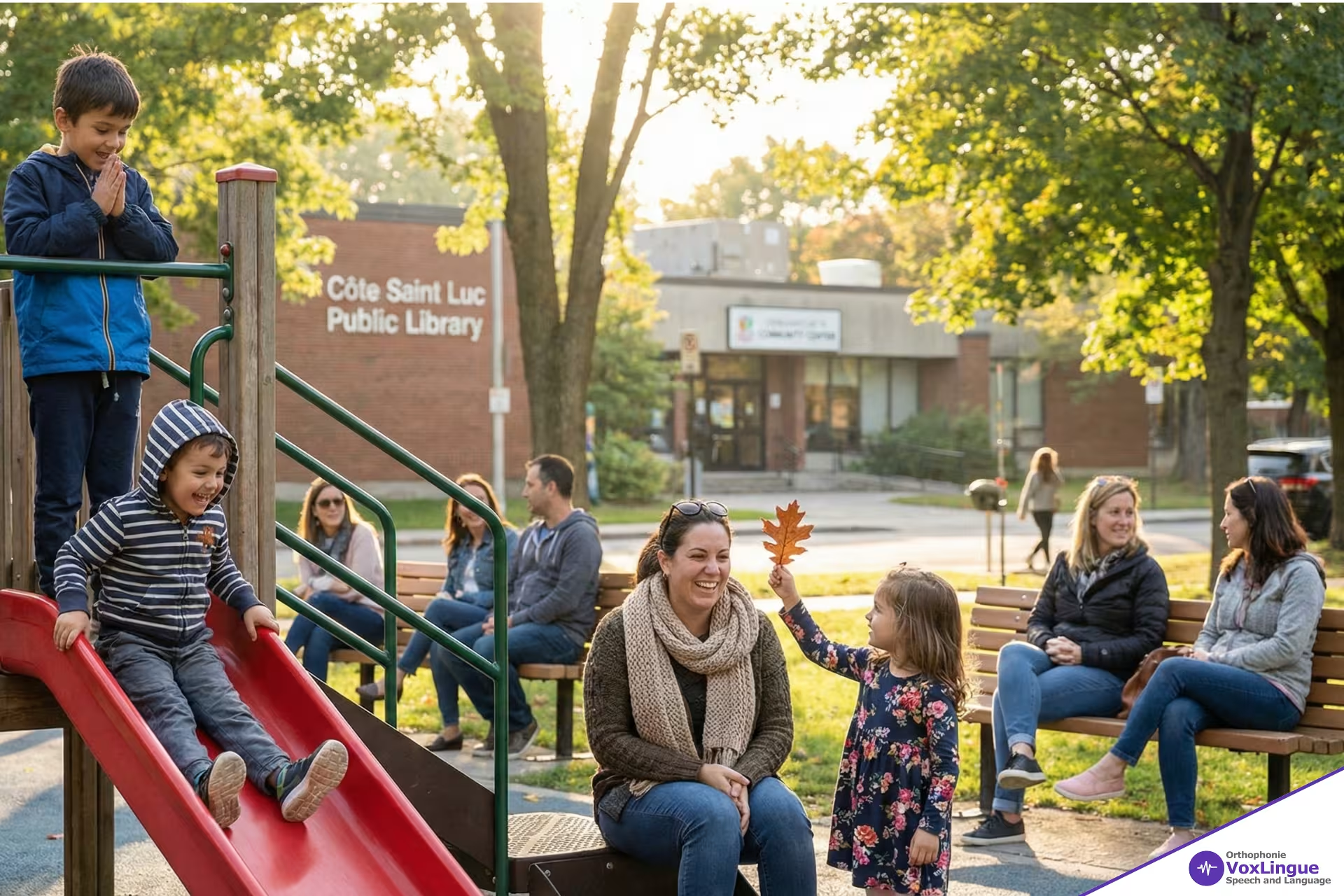
Everyday moments in these spaces matter. Waiting in line at a shop, choosing a library book, or meeting a friend at the playground all create natural prompts for conversation. These small exchanges support vocabulary building, social understanding, and early problem solving skills. Over time, repeated exposure to these communal experiences strengthens a child’s ability to express ideas and participate confidently in different settings.
Play is one of the most powerful tools for early communication development. Through unstructured play, children learn to explore ideas, solve problems, and express their thoughts without pressure. They experiment with sounds, words, and social roles while interacting with objects and people around them. Play encourages creativity, flexibility, and meaningful interaction, all of which support strong communication skills.
Côte Saint Luc provides many opportunities for play based learning. Local playgrounds, community centers, and informal playgroups allow children to discover new environments and build social connections. These settings encourage child centered exploration, where children choose how to engage and communicate. When children direct the play, they practice language that reflects their ideas and interests, which helps build confidence in communication.
Families who want to learn more about how early play supports language can explore this educational article that explains the foundations of early communication development:
Early communication development stimulating speech language development birth to three years old
Understanding how play supports communication helps families notice the many learning moments that happen naturally throughout the day. These experiences form the building blocks of expressive language, social understanding, and early literacy skills.
Many parents are unsure when to seek a speech and language assessment for their child. This uncertainty is very common, especially in a community as multilingual and diverse as Côte Saint Luc. Understanding early signs can help families feel more confident in recognizing when additional support or guidance may be helpful.
One of the first indicators to consider is vocabulary growth. Children develop words gradually, and each child has their own rhythm. However, if a child is using noticeably fewer words than their peers or is not adding new words over time, it may be helpful to explore why. Another important sign is difficulty understanding spoken language. Children who frequently seem confused by simple instructions or who rely heavily on visual cues may be working harder than expected to process everyday communication.
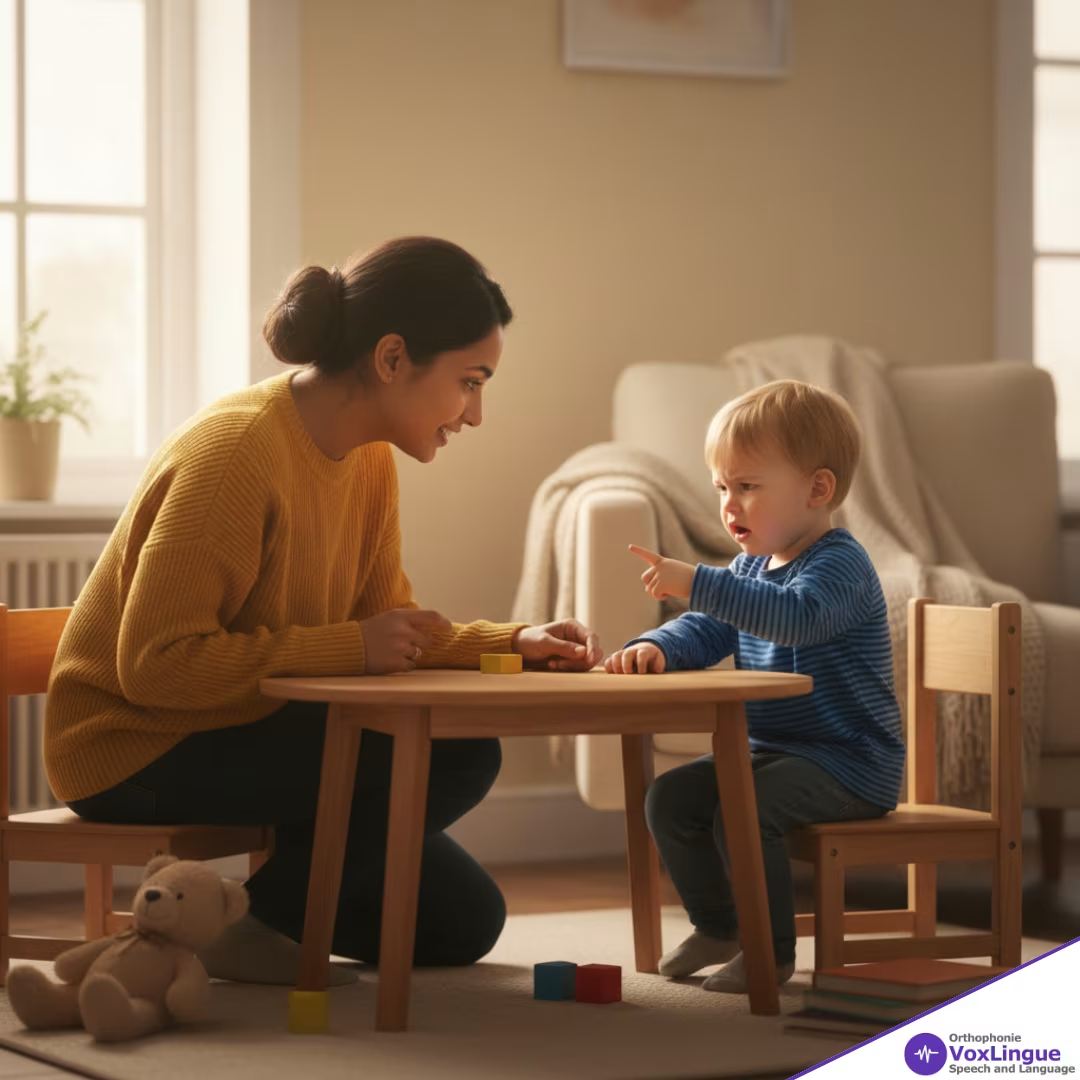
Social interaction is another area that can provide valuable information. Children learn through play and conversation with peers. If a child avoids group activities, has trouble initiating play, or becomes frustrated when trying to communicate with others, these patterns may signal that an assessment could offer helpful insight. Similarly, speech clarity is an important part of effective communication. If unfamiliar listeners struggle to understand a child’s speech, or if the child becomes upset when trying to express themselves, an evaluation can help identify whether supportive strategies are needed.
It is also important to remember that concerns do not need to be severe to benefit from a professional evaluation. Even mild or occasional difficulties can contribute to frustration for both the child and the family. An assessment provides clarity by outlining the child’s current strengths, identifying areas that may need support, and offering practical steps tailored to the child’s developmental stage. Families often find that understanding the child’s communication profile reduces stress and helps them make informed decisions.
For families who would like to learn more about the evaluation process, additional information is available here:
Speech and language assessment information
An assessment is simply a way to understand a child’s communication more fully. It helps caregivers gain clear guidance and supports the child’s confidence as they grow and learn.
Strong communication skills influence many areas of a child’s daily life. In the classroom, clear language abilities support participation, early literacy, and the ability to follow routines and interact with teachers. Children who can express their needs and ideas confidently tend to feel more secure and more connected to their learning environment. These skills also influence emotional wellbeing, since children often rely on language to manage frustration, solve conflicts, and build friendships.
Côte Saint Luc is a multilingual and multicultural community, which makes communication even more meaningful. Children navigate different languages at home, in school, and in community settings. Speech therapy can help children strengthen the skills that support success in these diverse environments. This may include building vocabulary in both languages used at home and school, improving clarity for unfamiliar listeners, or developing strong listening skills that help them follow group activities. When children feel confident communicating across different settings and with different people, they are more likely to participate, ask questions, and engage fully with their peers.
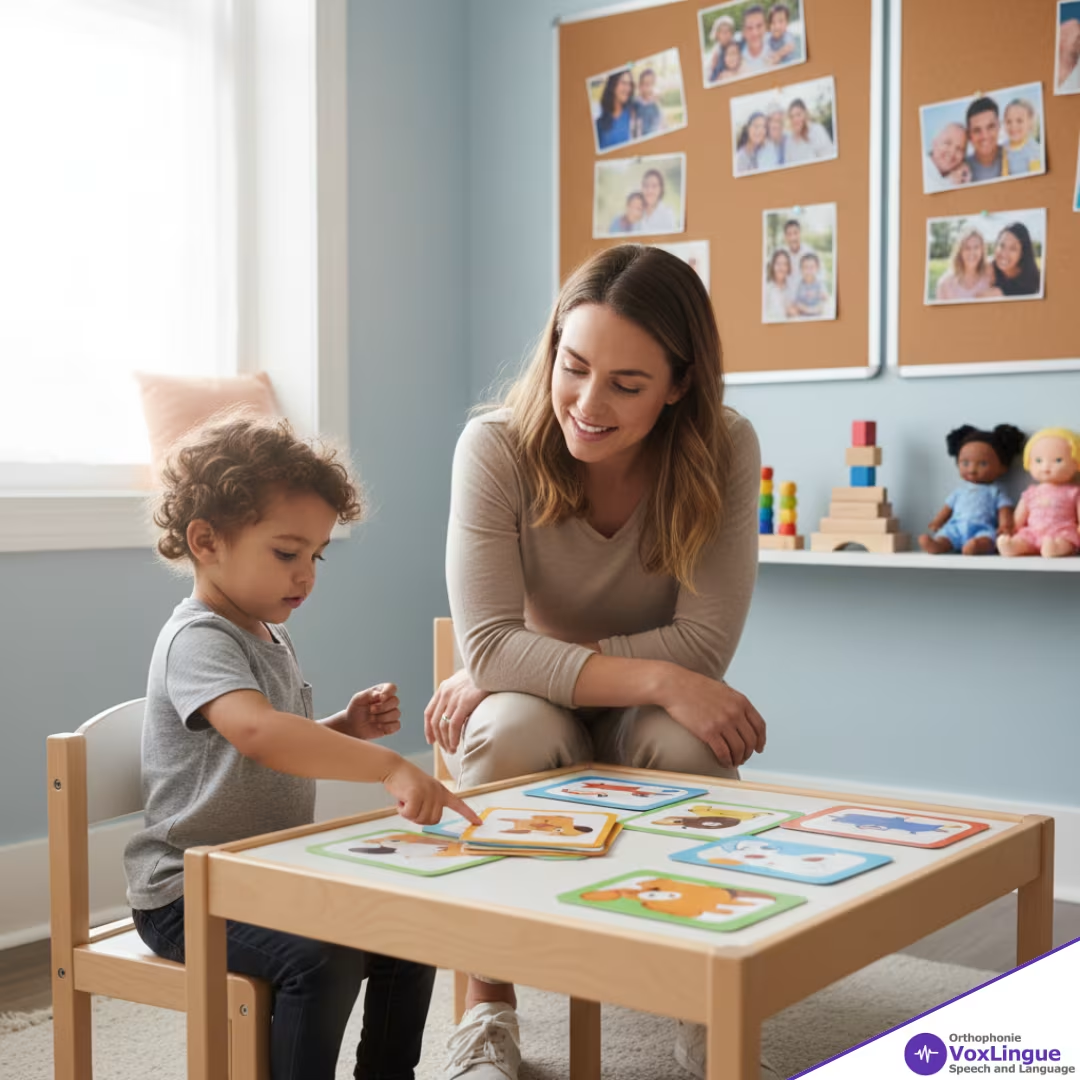
Families play an essential role in supporting communication development. Caregivers benefit from clear, practical strategies that they can use in everyday interactions. Simple routines offer rich opportunities for learning. Reading together allows children to hear new words and rhythms in language and encourages them to ask questions or share ideas. Using everyday objects to describe shapes, colours, and actions supports vocabulary growth. Expanding on a child’s ideas during play helps children learn how to build more complex sentences and express their thoughts more fully.
Speech therapy often involves collaborative guidance that fits naturally into family routines. Rather than adding pressure, the goal is to help caregivers recognize the moments that already support communication. When families understand why certain strategies are helpful, they begin to notice small changes in their child’s communication and feel more confident supporting their growth.
For families who want to explore simple, research informed activities that support early language development, this article offers practical ideas that can be used at home:
Stimulating language and speech in the early years
By working together, caregivers and professionals create an environment where children feel encouraged, understood, and ready to communicate confidently in the many spaces that make up life in Côte Saint Luc.
Côte Saint Luc is a community known for its welcoming atmosphere and strong cultural identity. The city has a diverse population, with many families who speak more than one language at home. This multilingual character shapes daily life and contributes to the rich communication environment that children experience from an early age. Hearing different languages during play, in school settings, or while participating in community programs is a normal part of growing up in Côte Saint Luc, and it provides children with meaningful exposure to a variety of communication styles.
The city’s cultural diversity is also rooted in its history. Côte Saint Luc has long been home to families from varied backgrounds who bring their traditions, languages, and stories into shared community spaces. This ongoing exchange has created a setting where children learn to appreciate different perspectives and develop social awareness that supports strong communication skills. When children grow up surrounded by cultural richness, they often develop curiosity and openness in their interactions with others.
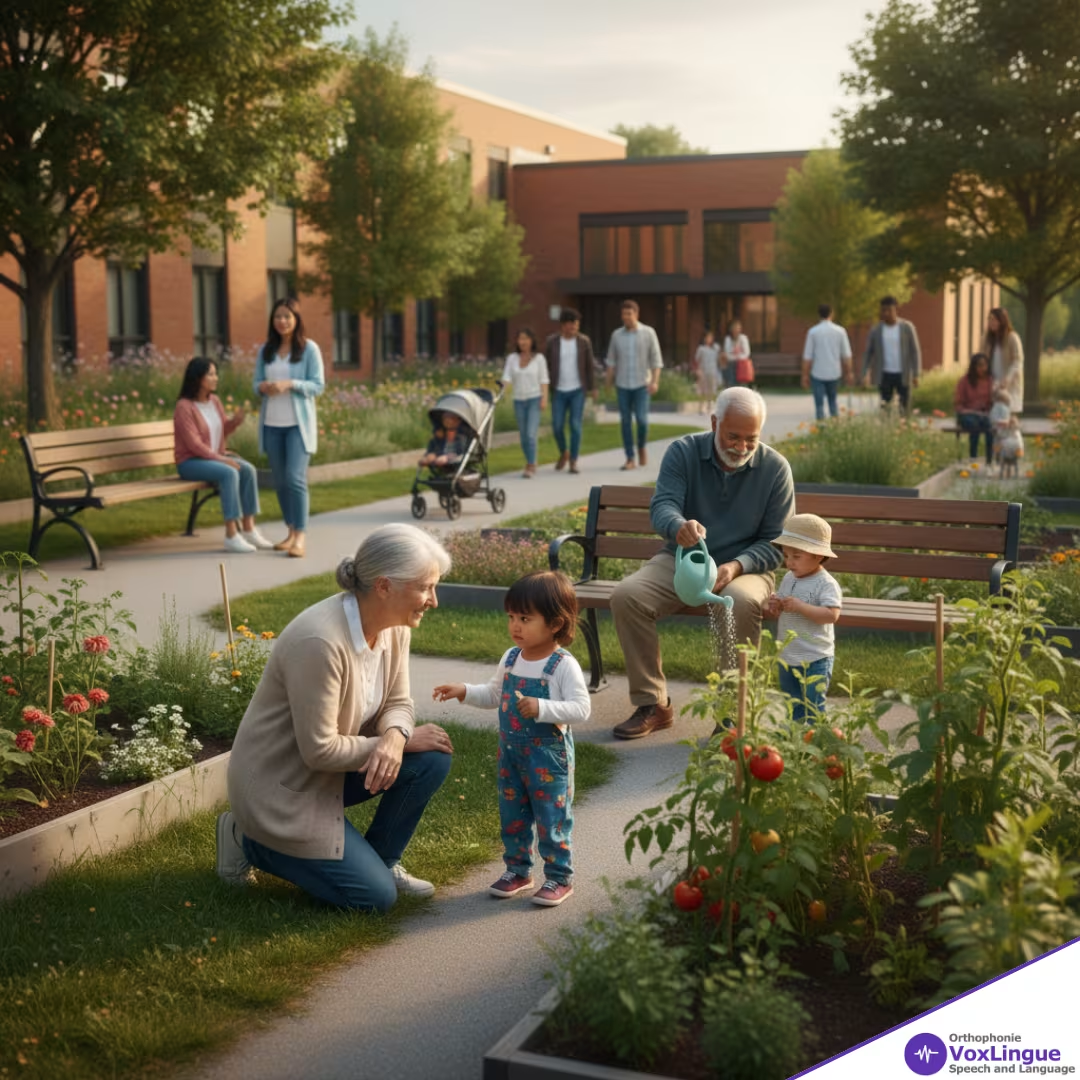
Another unique feature of Côte Saint Luc is its vibrant senior population. Many intergenerational programs encourage children and older adults to connect through storytelling, shared activities, and community events. These interactions offer valuable learning moments. Children learn to adapt their communication to different partners, practice listening skills, and experience the joy of meaningful conversations across generations. These exchanges strengthen empathy and confidence and create memories that stay with families for years.
Families in Côte Saint Luc also benefit from numerous community resources that support social engagement and active learning. Public swimming pools, community gardens, and seasonal festivals offer opportunities for children to participate in group activities, explore new interests, and interact with peers in relaxed and enjoyable settings. Each of these experiences contributes to communication growth by encouraging conversation, cooperation, and shared problem solving.
For more information about programs, services, and community features, you can visit the official city website here:
City of Côte Saint Luc
Understanding the community around you provides helpful context for how communication develops. Côte Saint Luc offers children a setting filled with learning opportunities, supportive relationships, and a strong sense of belonging, all of which are essential foundations for healthy speech and language development.
Bilingualism is a natural and enriching part of life for many families in Côte Saint Luc. Exposure to more than one language helps children develop strong cognitive flexibility, problem solving abilities, and social awareness. It is normal for bilingual children to show different strengths in each language depending on how often they use them and in which settings they hear them. Mixing languages or preferring one language during certain activities is also expected and does not signal confusion. Understanding what is typical in multilingual development can help caregivers feel more confident as they observe their child’s progress.
Many families wonder whether their child’s communication patterns fall within a typical range. A child may benefit from an evaluation if they show persistent difficulty understanding instructions, have limited vocabulary growth, struggle to interact with peers, or become easily frustrated when trying to communicate. Unclear speech that is difficult for others to understand can also be an important indicator. These signs do not always mean that a child has a disorder, but they do suggest that an assessment could offer clarity and guidance. Families in multilingual homes may find it especially helpful to learn which behaviours are expected and which might require further attention.
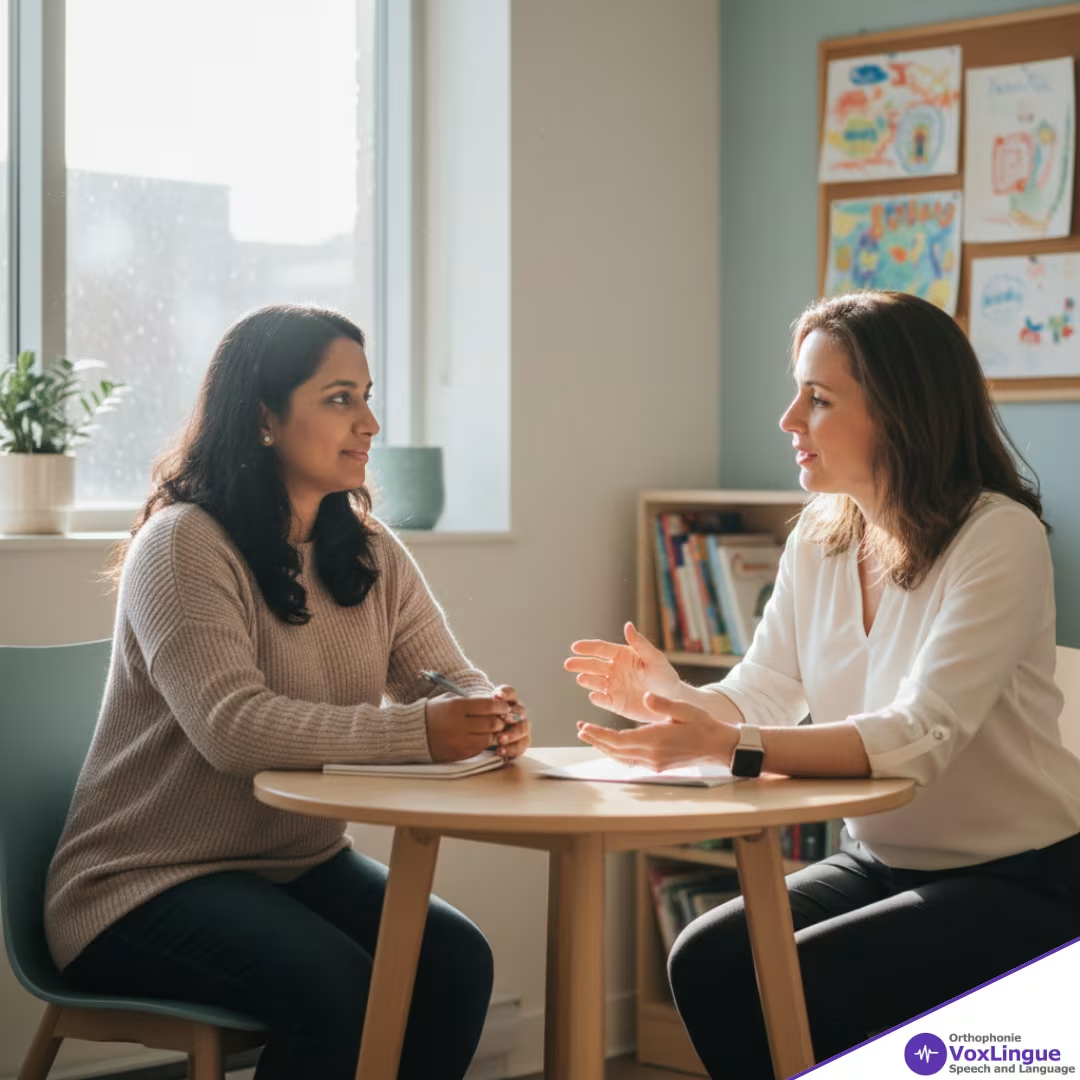
A speech and language assessment is a structured evaluation that explores how a child communicates in different areas. This may include understanding language, expressing ideas, using clear speech sounds, engaging in social communication, and participating in play or conversation. The process often includes observations, interactive tasks, caregiver interviews, and standardized tools that help identify strengths and areas that may need support. Assessments are designed to be child friendly and provide families with a clear and informative picture of how their child communicates.
Everyday routines offer countless opportunities to support language development. Reading together encourages children to explore new vocabulary and develop early literacy skills. Talking through daily activities, such as preparing meals or getting ready for school, helps children learn sequencing and descriptive language. Playtime is especially powerful. When caregivers expand on a child’s ideas or follow the child’s lead during play, they model richer language and help the child communicate more confidently. Simple interactions create meaningful learning experiences that grow over time.
Parent supported strategies can be very effective because children learn best through meaningful interactions with familiar caregivers. When parents understand how communication grows and use supportive techniques consistently, children often show noticeable progress. Structured therapy and home strategies complement one another. Therapy provides targeted guidance, while home routines allow children to practice new skills in natural settings. Families who combine both approaches typically see strong communication outcomes because learning becomes part of everyday life.
These questions reflect common concerns shared by families in Côte Saint Luc, and each answer aims to provide clarity and reassurance as caregivers support their child’s language journey.
Côte Saint Luc offers a uniquely nurturing environment for children as they learn to communicate with confidence. Its multilingual character, strong cultural diversity, and rich network of community programs create daily opportunities for children to explore language in meaningful and natural ways. From conversations at the library to imaginative play in local parks, each experience helps build the foundations of communication, social understanding, and early literacy.
Families in this community benefit greatly from staying informed about how language develops and from recognizing the small moments that support communication growth. Early guidance and education allow caregivers to understand what is typical, what may require attention, and how everyday interactions can strengthen a child’s progress. Community engagement plays an important role as well, since children learn best through experiences that are social, joyful, and connected to the world around them.

This page is meant to provide insights and resources that help families feel confident and supported as they navigate their child’s communication journey. Readers who would like to explore further information or ask questions can visit the contact page here:
Contact VoxLingue
Côte Saint Luc is a community where children learn, grow, and communicate within a caring and vibrant environment. By staying informed and engaged, families help create the conditions in which children can thrive.