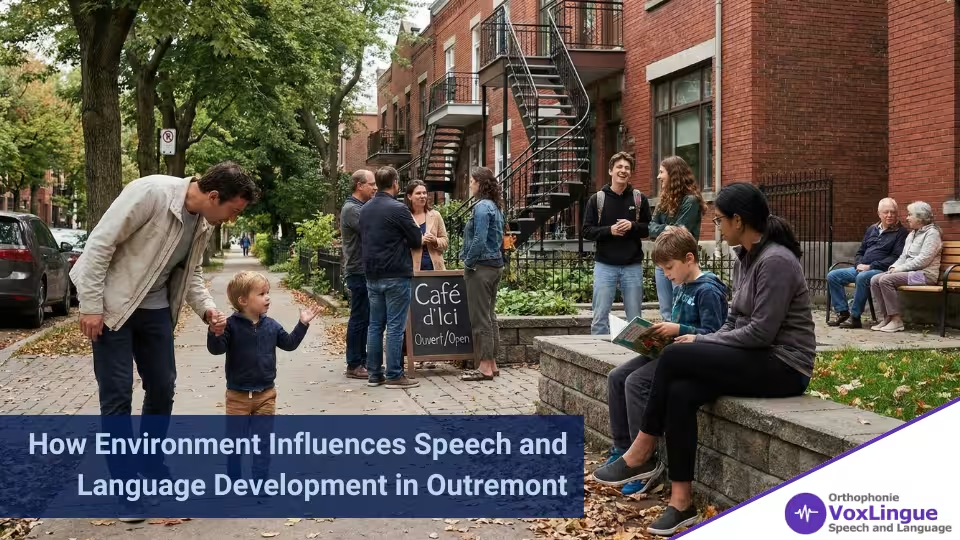
Outremont is often described as a neighborhood designed around daily life rather than traffic or urgency. Tree lined streets invite walking. Parks and playgrounds are woven into residential blocks. Schools, libraries, cafés, and local services sit within easy reach of families. These features do more than shape routines. They quietly influence how children and adults communicate, learn, and connect with one another.
Communication development does not happen only in clinical settings. It is shaped through everyday interactions such as conversations on the walk to school, shared attention during play at the park, story time at the library, and exchanges across languages at home and in the community. The environments people move through each day provide opportunities for listening, expressing ideas, negotiating meaning, and building social understanding long before speech or language concerns are ever identified.
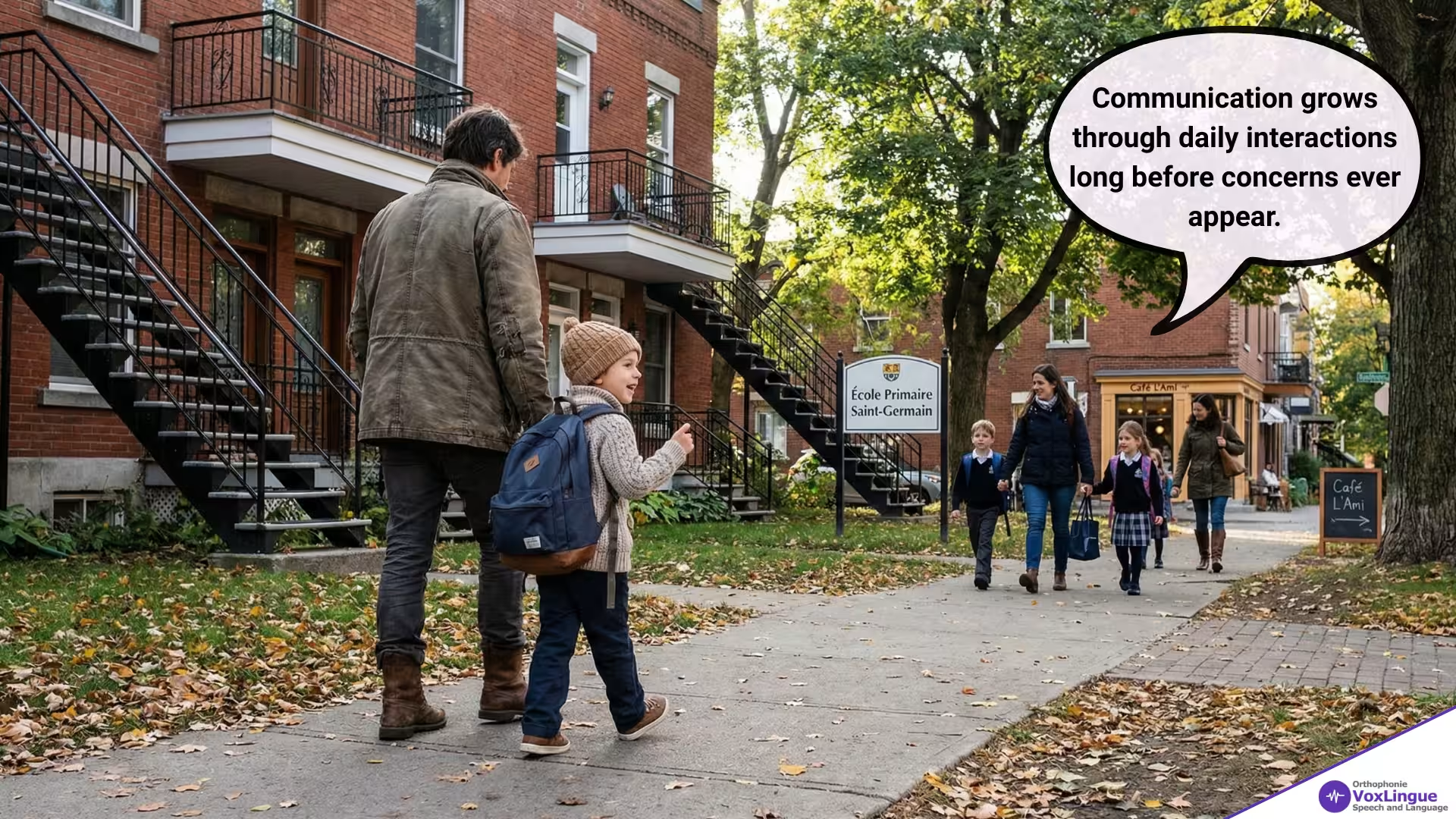
Outremont is known for its strong sense of family life, its emphasis on education, and its multilingual reality. Many households navigate more than one language across home, school, and social settings. Children grow up hearing different sounds, sentence structures, and communication styles depending on where they are and who they are with. For parents, this richness can raise thoughtful questions about what is typical, what reflects natural variation, and when additional support may be helpful.
This page explores speech and communication development through the lens of life in Outremont. Rather than focusing on therapy services, it looks at how the neighborhood itself supports communication growth and how everyday experiences contribute to language development across childhood and beyond. The goal is to offer context, understanding, and insight that families can use to better interpret what they see and hear in daily life.
Outremont is primarily a residential borough, shaped around families, schools, and shared community spaces. Its urban design reflects a long standing emphasis on education, accessibility, and neighborhood life. These characteristics influence far more than convenience. They shape how often people interact, how conversations unfold, and how children observe and practice communication in real settings.
Walkable streets play an important role in this process. When families move through their neighborhood on foot, communication becomes part of the routine rather than a scheduled activity. Children overhear greetings between neighbors, ask questions about what they see, and learn how conversations begin and end naturally. These brief exchanges support pragmatic communication skills such as turn taking, eye contact, and adjusting language based on the listener.
Neighborhood parks, cafés, and local shops further extend these opportunities. Time spent waiting in line at a bakery, ordering a drink, or playing alongside other children encourages spontaneous language use. These moments require children to interpret social cues, respond to unfamiliar voices, and adapt their communication to new situations. From a speech and language perspective, this type of real world practice supports flexibility and social understanding in ways structured activities alone cannot.

Daily routines common in Outremont also contribute to language exposure in subtle but meaningful ways. Walking to school invites conversation about plans for the day. Visiting the library supports shared attention and narrative development through books and storytelling. Participating in community activities exposes children to varied vocabulary, sentence structures, and communication styles. Over time, these repeated experiences help build a strong foundation for both expressive and receptive language.
For families who want to better understand how their environment supports development, the City of Montreal provides a helpful overview of the borough and its services at https://montreal.ca/en/places/outremont-borough
Taken together, these features make Outremont a community where communication is embedded in everyday life. Language learning is not limited to formal settings. It unfolds naturally through movement, interaction, and participation in a neighborhood designed to bring people together.
In Outremont, multilingualism is part of daily life. Many children grow up hearing one language at home, another at school, and additional languages in the community. Adults often move fluidly between languages depending on context, audience, or purpose. From a speech and language perspective, this richness is not only typical but expected in a neighborhood shaped by cultural diversity and strong educational values.
One of the most common misconceptions families encounter is the belief that exposure to more than one language can confuse a child or slow language development. Research and clinical experience consistently show that learning multiple languages does not cause language disorders. Children in multilingual households develop language using the same underlying learning systems as monolingual children. What differs is how and where each language is used. Vocabulary may be distributed across languages rather than duplicated, and certain sounds or sentence structures may emerge earlier in one language than another.
Switching between languages in daily life can influence how language looks on the surface. A child may understand far more than they can express in one language while being more verbally confident in another. Code switching, or moving between languages within a conversation, is a normal and efficient communication strategy rather than a sign of difficulty. These patterns reflect flexibility and awareness of the listener rather than confusion.
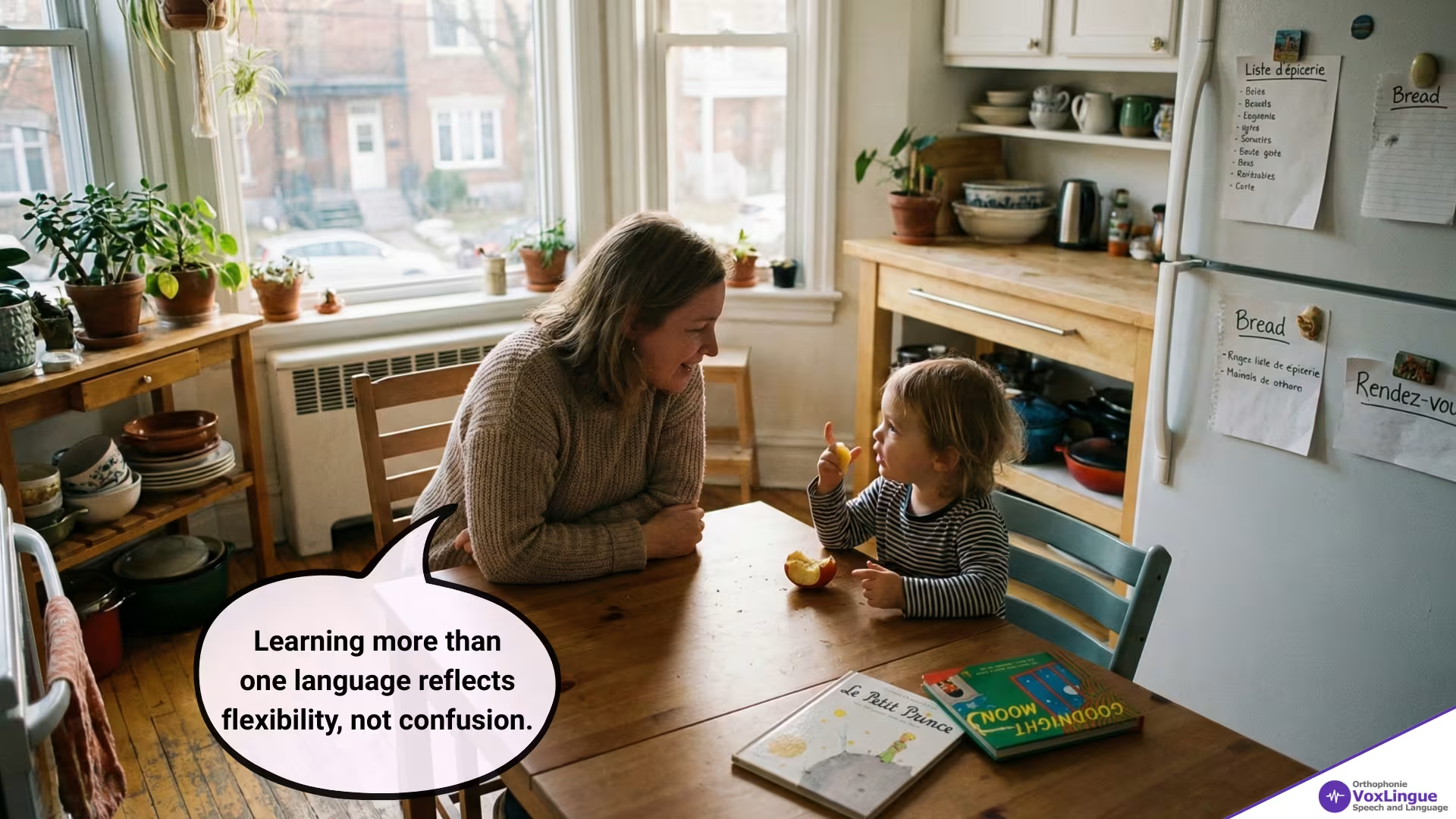
Multilingual environments can also create temporary variations that sometimes raise questions for parents. For example, children may pause briefly when selecting words, mix grammatical structures, or show differences in pronunciation depending on the language being used. These variations are part of the learning process and often shift as exposure balances out over time. Importantly, a true language disorder will appear across all languages a child uses, not in only one setting or language.
Families interested in a deeper explanation of how bilingual development works and how professionals distinguish difference from disorder may find this article helpful: https://www.voxlingue.com/post/bilingualism-raising-bilingual-children-speech-language-impairments
Understanding multilingual development within its proper context can be reassuring. In communities like Outremont, navigating multiple languages is not an obstacle to communication growth. It is a reflection of a rich linguistic environment that shapes how children and adults learn to listen, express themselves, and connect with others.
Communication develops most naturally in environments where interaction feels meaningful and shared. In Outremont, many of the places families visit every week already support important communication skills without requiring any special setup. Parks, libraries, and learning spaces create opportunities for children to listen, respond, negotiate, and connect in ways that feel organic and low pressure.
Outdoor play offers a rich context for early communication because it encourages shared attention. When a child and caregiver focus on the same activity, such as watching another child climb, feeding birds, or taking turns on a swing, language becomes purposeful. Words are tied to actions, emotions, and outcomes that are immediately visible.
Both structured and unstructured play support communication in different ways. Structured play, such as organized games or routines, helps children practice following directions and understanding predictable language patterns. Unstructured play invites creativity and problem solving, which encourages children to initiate communication, negotiate roles, and adapt their language based on what is happening around them.
Mount Royal Park is a central gathering space for many Outremont families. Its open areas and varied activities naturally promote interaction across ages. A walk through the park can include naming objects, asking questions, taking conversational turns, and responding to new sensory experiences. These moments support vocabulary growth, pragmatic language skills, and emotional expression in ways that feel natural rather than instructional.
Families interested in learning more about the park and its programs can explore https://www.lemontroyal.qc.ca
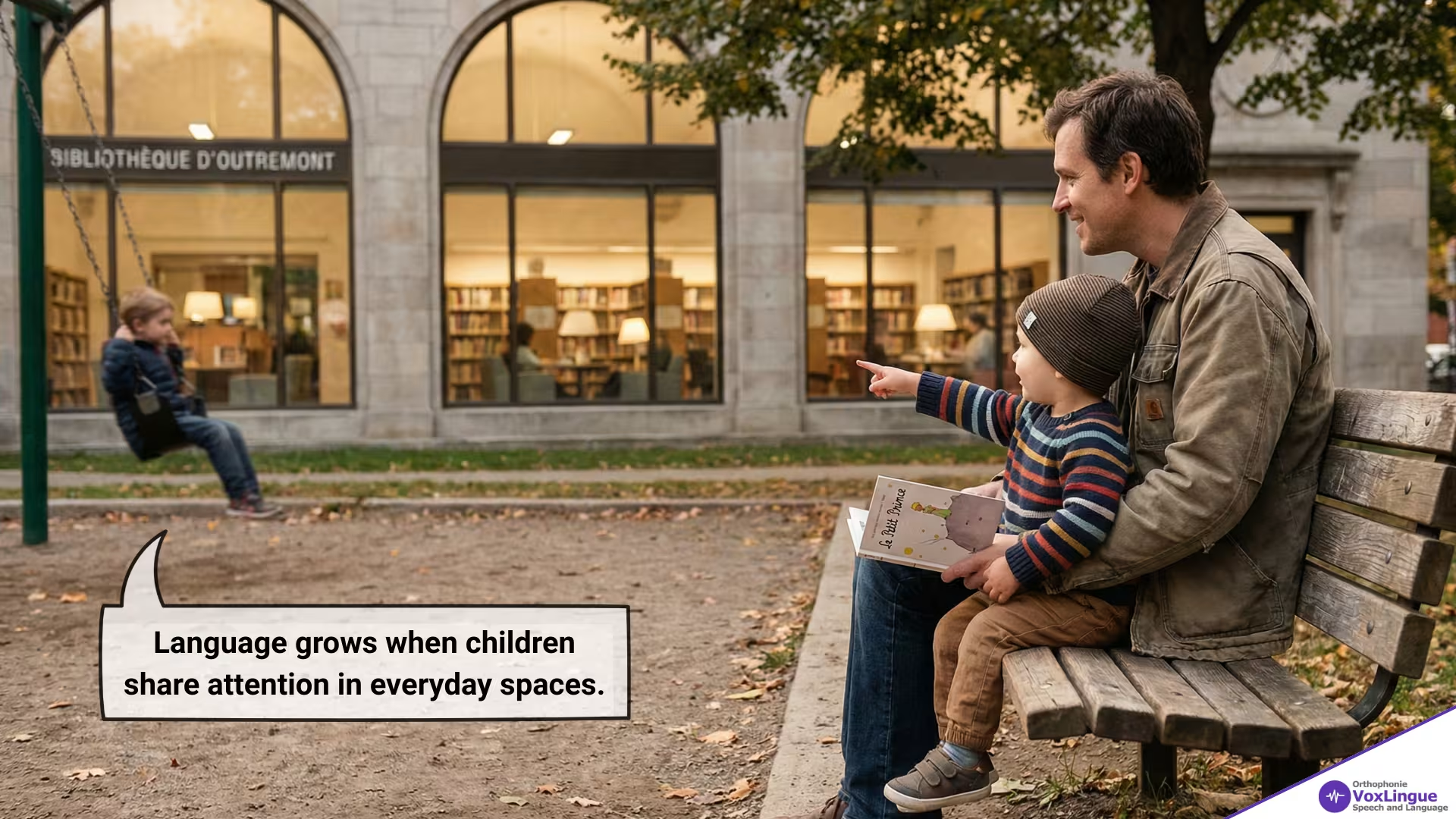
Libraries offer a different but equally valuable communication environment. Quiet spaces invite focused interaction and shared attention around books, pictures, and stories. Story time sessions support listening skills, sound awareness, and early narrative development. Shared reading encourages children to connect words with meaning while learning how stories are structured.
Across ages, libraries support language growth in distinct ways. Young children benefit from repetitive language and visual supports found in picture books. School age children strengthen comprehension and storytelling skills. Older children and adults engage with more complex texts that support vocabulary expansion and abstract thinking.
Bibliothèque Robert Bourassa is a familiar learning space for many local families. Time spent there encourages calm conversation, thoughtful questions, and meaningful exchanges around shared interests. These interactions help build language skills that extend beyond reading into everyday communication.
Information about library services and programming is available at https://bibliomontreal.com
Together, these everyday places show how communication development is woven into community life. When children and families engage regularly in these environments, language learning becomes a natural part of participation rather than a separate task.
Many families in Outremont describe noticing changes in communication during periods of transition. These observations often emerge at moments when routines shift or expectations increase rather than during times of stability. From a speech and language perspective, this curiosity is both common and appropriate.
Communication demands grow as children move through different stages of development. Starting school, changing classrooms, or adjusting to new social environments can highlight skills that were previously sufficient but now require refinement. A child who communicated comfortably at home may appear quieter in a classroom setting. A teenager may struggle to organize thoughts when academic language becomes more abstract. Adults may notice changes in clarity or confidence when workplace communication becomes more complex.
It is important to recognize that noticing these differences does not automatically indicate a problem. Communication is not a fixed skill. It adapts to context, audience, and purpose. As expectations increase, communication may look less efficient for a period of time while new skills are developing. This adjustment period is a normal part of growth.
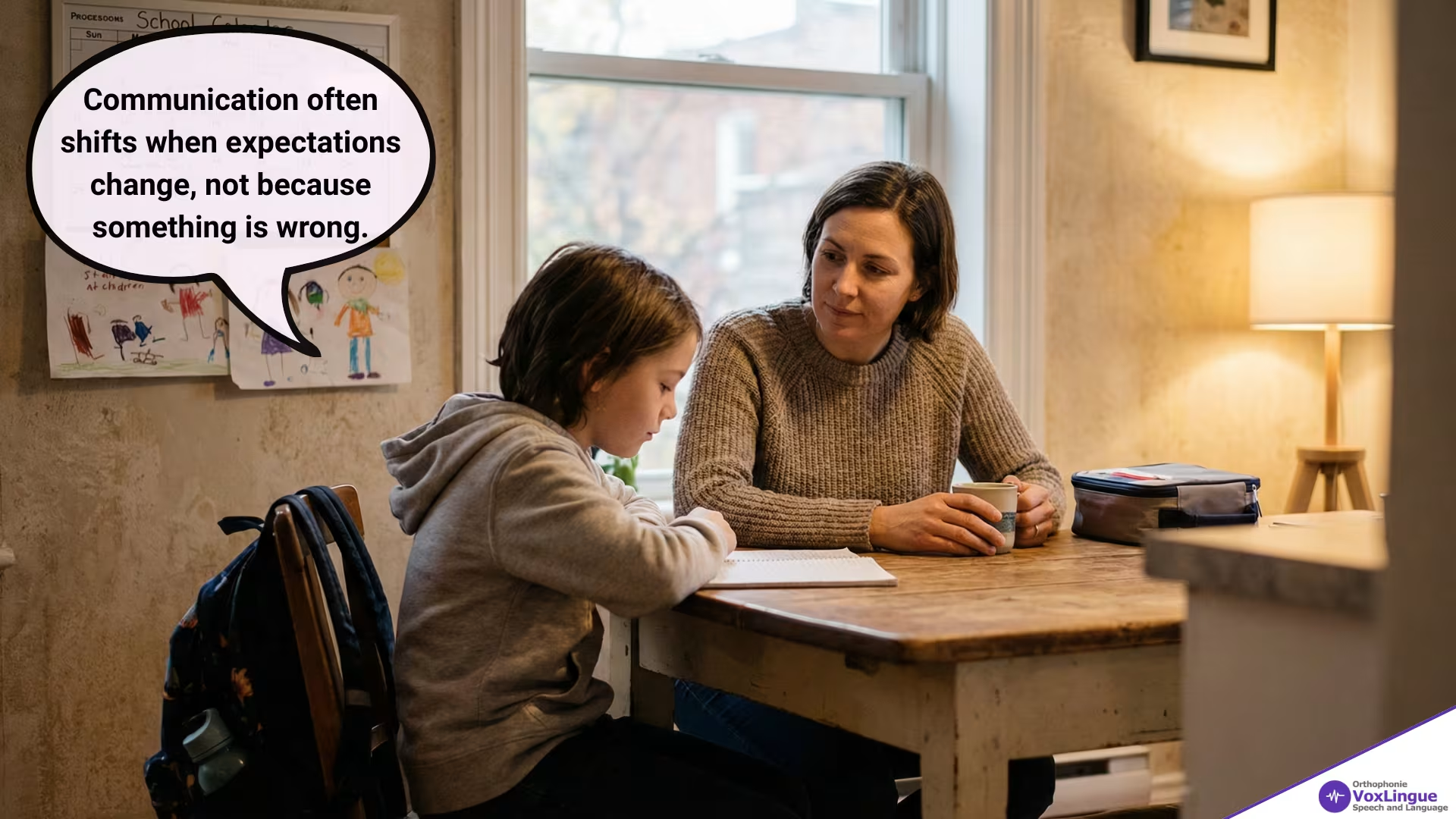
Parents often ask whether they should be concerned when their child speaks differently across settings. Differences between home, school, and social environments are common and often reflect how comfortable a child feels in each situation. Similarly, adults may communicate with ease in familiar contexts while feeling less confident in new or high pressure situations. These variations highlight the role of emotional regulation, attention, and social awareness in communication.
Approaching these questions with curiosity rather than urgency can be helpful. Observing when challenges appear, what supports communication, and how a person responds to changing demands provides valuable insight. In many cases, these observations simply reflect the natural process of adapting to new communication expectations rather than a loss of skill.
By viewing communication differences through this everyday lens, families can better distinguish between typical variation and situations where additional guidance may be helpful.
Speech therapy is often most effective when it is understood as a support that complements everyday communication rather than something separate from daily life. Language does not develop in isolation, and meaningful progress is closely tied to how communication is used across real environments such as home, school, and the broader community.
In practice, speech therapy builds on interactions that already occur naturally. Conversations during meals, storytelling at bedtime, problem solving during play, and social exchanges with peers all provide valuable information about how a child or adult communicates. These moments help identify strengths, emerging skills, and areas where communication may break down under certain conditions. Therapy draws from these observations to guide goals and strategies that feel relevant and practical.
Assessment is a collaborative process that considers context as much as performance. Rather than focusing only on isolated tasks, clinicians look at how communication functions across settings and with different communication partners. Input from parents, teachers, and the individual themselves helps create a fuller picture of how language is used and where support may be beneficial. This approach recognizes that communication is influenced by attention, emotional regulation, social expectations, and environmental demands.
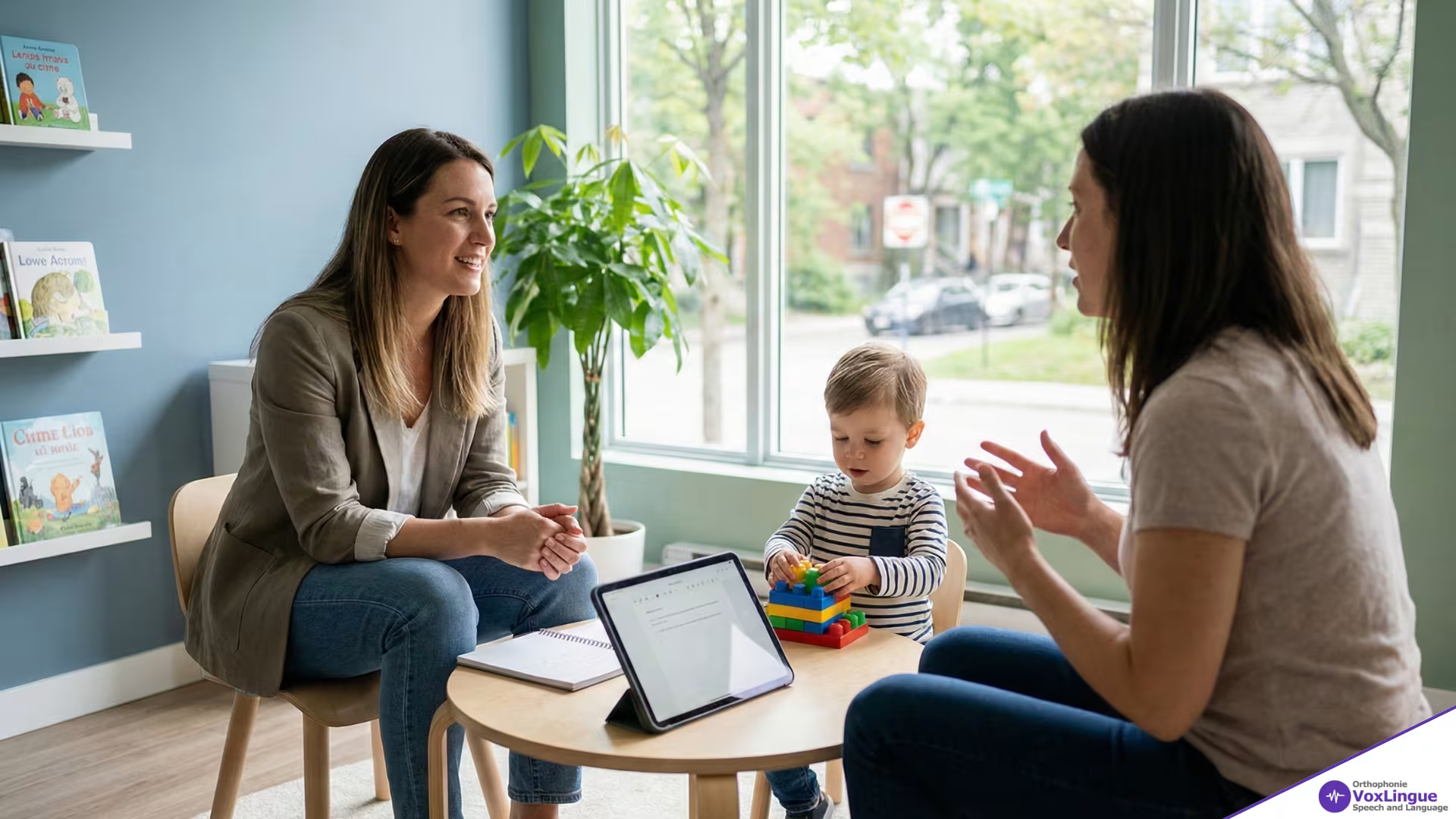
Support is most meaningful when it aligns with daily routines. Strategies introduced through therapy are intended to fit naturally into family life and classroom activities rather than adding pressure or rigid expectations. When communication tools are integrated into familiar situations, they are more likely to be used consistently and generalized across environments.
Families who would like a clearer understanding of how speech and language assessments work can explore an overview here: https://www.voxlingue.com/assessment
By viewing speech therapy as a process that works alongside community life, families can better appreciate how small changes in everyday interactions support long term communication growth.
Communication continues to evolve throughout life, shaped by changing roles, expectations, and environments. In a community like Outremont, where people of all ages share public spaces, schools, and cultural institutions, it is common to observe communication needs that look different across stages of life while remaining connected by the same underlying foundations.
In early childhood, communication is closely tied to interaction and play. Young children learn language through shared attention, imitation, and emotional connection with caregivers. Gestures, facial expressions, and early sounds gradually become words and short sentences as children participate in routines at home, daycare, and in the community. These early experiences lay the groundwork for later learning.
During the school years, language demands expand. Children are expected to follow multi step directions, understand abstract vocabulary, and express ideas clearly in both spoken and written forms. Social communication also becomes more complex as peer relationships require negotiation, perspective taking, and flexible language use. Differences that were less noticeable earlier may become more apparent as expectations increase.
Adolescence brings another shift. Language is used to express identity, manage social relationships, and engage with more complex academic content. Teenagers often balance multiple communication styles depending on context, such as speaking with peers, teachers, or family members. Emotional regulation and executive functioning play a growing role in how effectively ideas are organized and communicated.
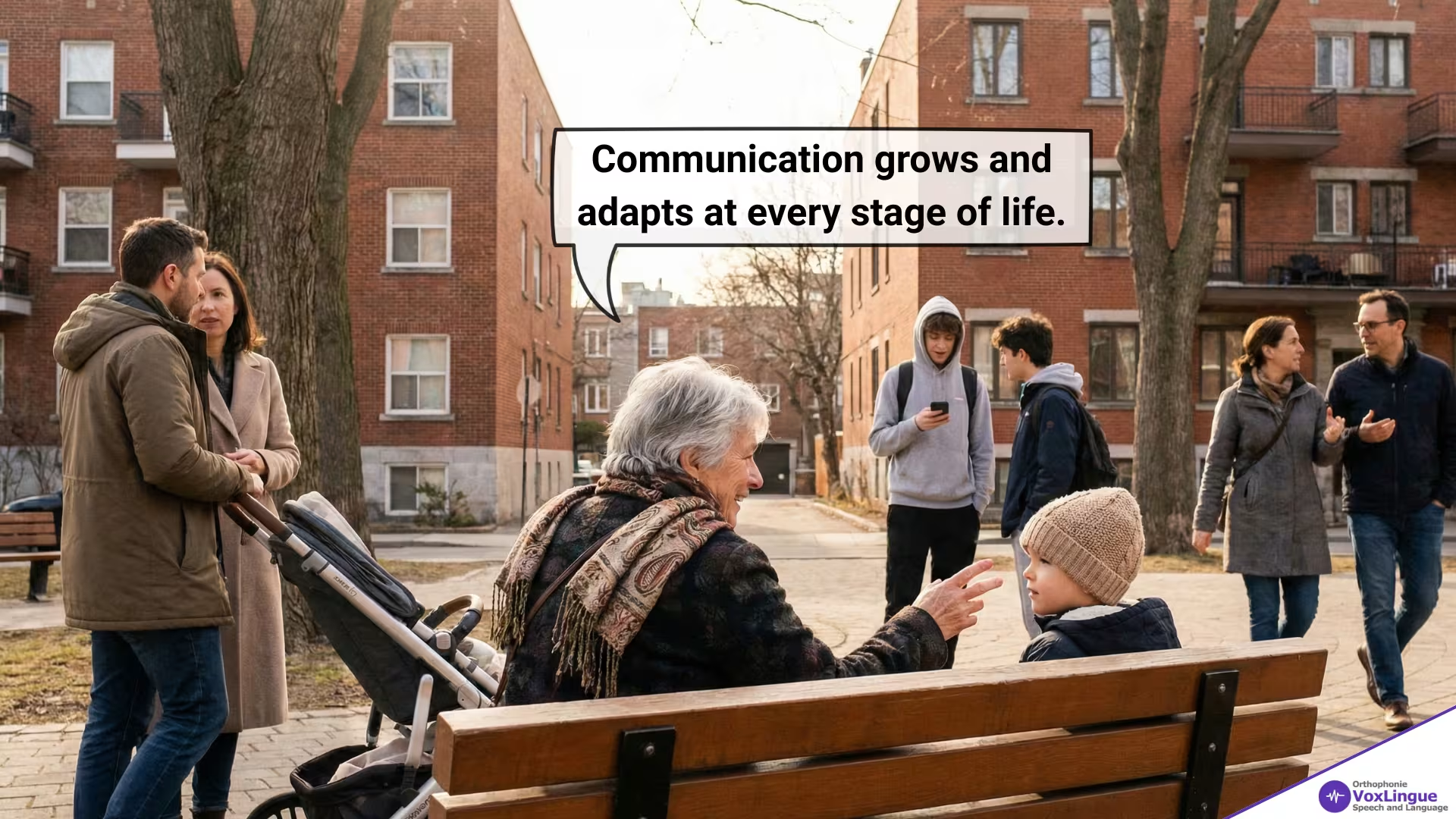
In adulthood, communication supports participation in professional, social, and family life. Changes in work demands, stress levels, or health can influence clarity, confidence, and efficiency. For some adults, communication challenges emerge gradually, while for others they appear after a significant life event. These changes reflect the dynamic nature of communication rather than a loss of ability alone.
Across all stages, communication is shaped by environment and experience. Understanding this lifespan perspective helps families recognize that communication growth and change are ongoing processes. In a neighborhood that values learning and connection, observing and supporting communication at every age becomes part of community life rather than a response to difficulty alone.
Outremont offers a living environment where communication is supported through daily experience rather than deliberate instruction alone. Walkable streets, shared public spaces, libraries, schools, and a strong multilingual presence create countless opportunities for listening, expressing ideas, and connecting with others. These everyday interactions shape how communication develops across childhood and continue to influence it throughout life.
Understanding communication within its local context can help families feel more grounded in what they observe. Differences in how children or adults communicate often reflect changing expectations, environments, or routines rather than immediate cause for concern. When communication is viewed as something that adapts to context, it becomes easier to recognize natural variation and to appreciate the role everyday experiences play in supporting growth.

Curiosity and awareness are valuable starting points. Paying attention to how communication unfolds at home, in the community, and across different situations provides insight that goes beyond isolated milestones. In a community like Outremont, where connection and participation are part of daily life, this perspective helps families approach communication with confidence, understanding, and a sense of balance when questions arise.