Villeray is often described as a neighborhood built for everyday life. Streets invite walking. Local parks and playgrounds are woven into residential blocks. Schools, libraries, cafés, and family services are part of the daily rhythm for many households. These features do more than shape routines. They quietly influence how children and adults communicate, learn, and connect with one another over time.
Communication development does not happen only in clinical settings. It unfolds through daily interactions such as conversations on the walk to school, shared attention during play at the park, story time at the library, and exchanges at home in one or more languages. In a community like Villeray, where families spend time in close proximity and children regularly interact with peers and adults, these moments form the foundation of language, social understanding, and communication skills long before any concerns are identified.
Understanding communication within its real world context matters. Differences in how a child speaks, understands language, or interacts socially often reflect the environments they move through each day, not just individual ability. Speech therapy fits within this broader developmental ecosystem by helping families make sense of communication patterns, supporting growth where needed, and strengthening the skills that allow children and adults to participate fully in their community.
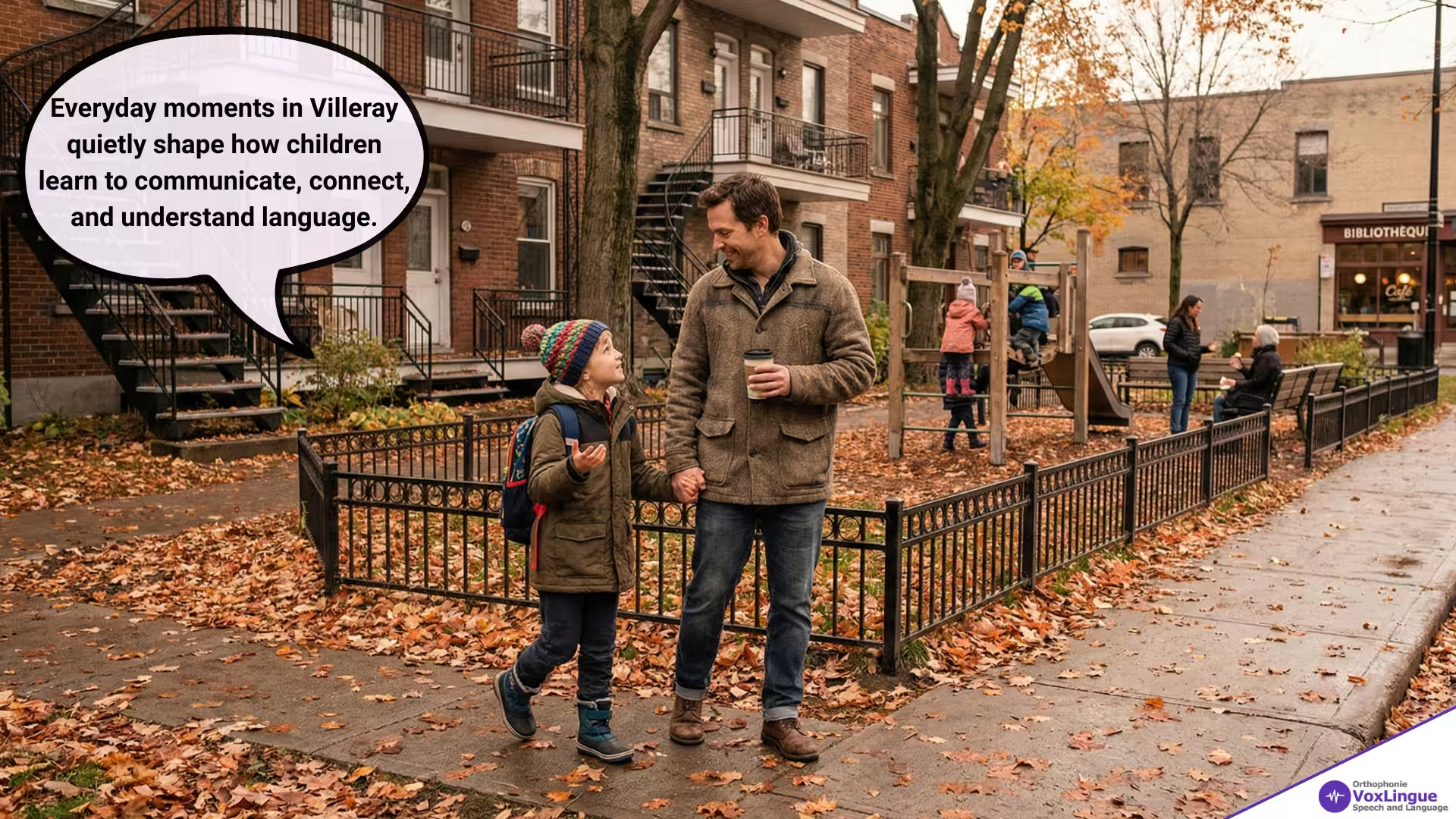
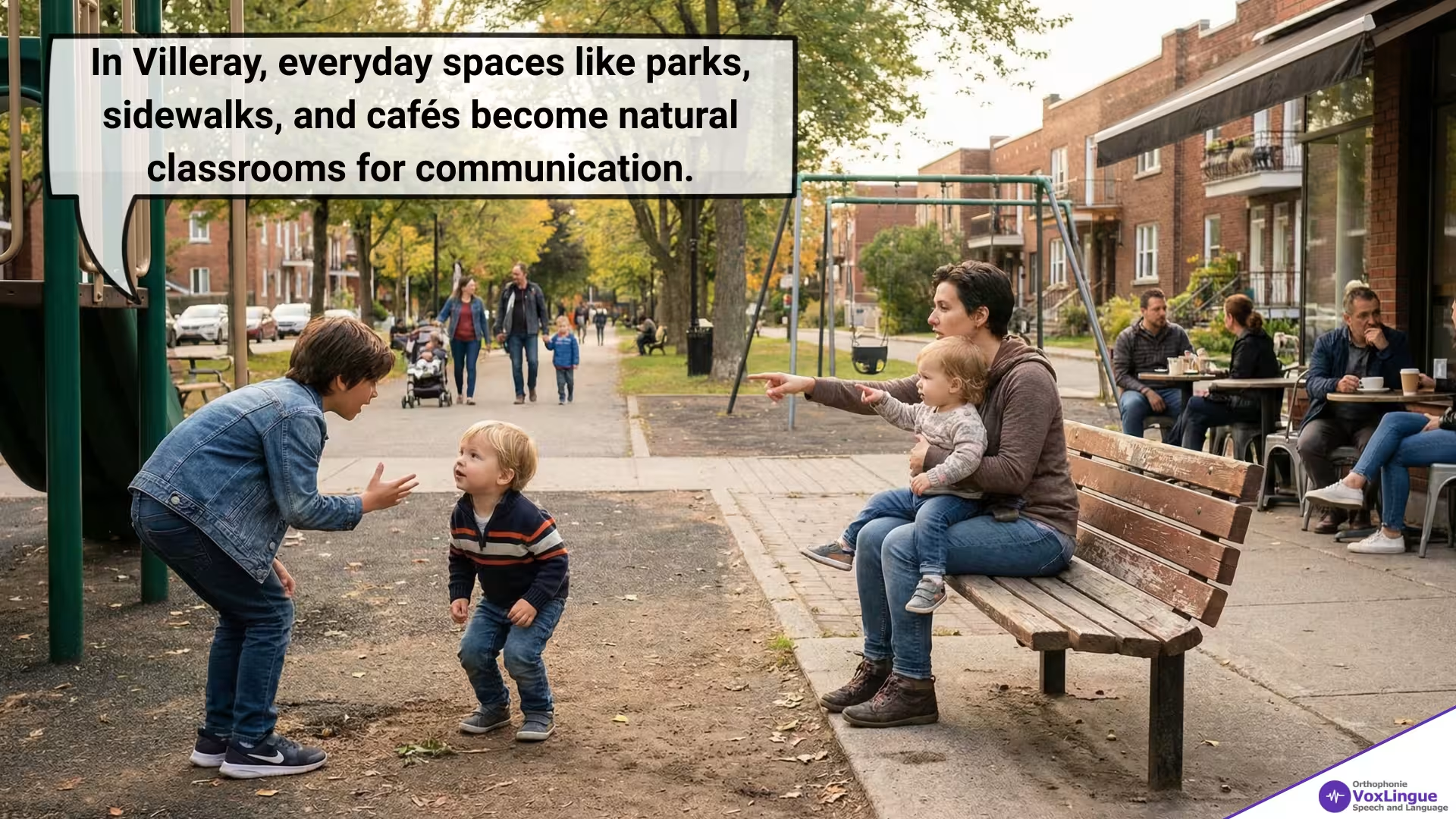
The way a neighborhood is designed can quietly shape how communication develops across childhood and into adulthood. In Villeray, daily life encourages interaction. Many families move through the neighborhood on foot, children encounter familiar faces regularly, and shared spaces support spontaneous conversation. These small moments add up and play a meaningful role in how language, social skills, and confidence grow.
Walkability supports communication in natural ways. Conversations during routines such as walking to school, stopping at a local shop, or greeting neighbors offer repeated opportunities for children to listen, respond, and practice expressive language without pressure. These exchanges are often short and informal, yet they build important skills like turn taking, vocabulary growth, and conversational flexibility.
Public green spaces are another key part of Villeray’s communication landscape. Areas like Parc Jarry bring together families, children of different ages, and caregivers from diverse backgrounds. Playgrounds encourage peer interaction, negotiation, and shared imagination. These social experiences help children learn how to initiate interactions, respond to others, and adapt their communication depending on the situation.
Libraries and community spaces also contribute to language development. The Bibliothèque de Villeray offers access to books, storytelling activities, and quiet shared attention around language. Exposure to stories supports vocabulary, narrative skills, and listening comprehension. For many children, these experiences complement what happens at home and school by offering language in a calm and engaging setting.
Everyday public spaces further enrich communication. Cafés, markets, and community centers provide informal environments where children observe and participate in real conversations. Hearing adults exchange ideas, ask questions, and tell stories helps children learn the rhythms and purposes of language. In households where multiple generations live nearby or share caregiving roles, extended family interactions also support communication by exposing children to varied speaking styles, cultural references, and conversational expectations.
Together, these elements create a language rich environment where communication develops through participation in daily life. Understanding how these surroundings influence communication helps families recognize that progress often happens outside structured activities, shaped by the neighborhood itself.
Family centered neighborhoods like Villeray naturally bring communication into focus. Parents often spend a great deal of time observing how their children talk, listen, and interact, especially during the early years. Questions tend to arise not because something feels wrong, but because families are attentive to development and exposed to many points of comparison through daycare, playgrounds, and school environments.
Language development unfolds through daily routines long before children are expected to speak clearly or follow complex instructions. Mealtime conversations, getting dressed, bath time, and bedtime stories all provide opportunities for children to hear language, make sense of it, and eventually participate. These moments support understanding first, which is a crucial foundation for later expressive language.
As children begin attending daycare or preschool, peer interaction becomes more visible. Group settings introduce new communication demands such as waiting for a turn, responding to others, and adjusting language based on the listener. Some children thrive in these environments, while others need more time to observe before joining in. Differences in attention, social engagement, and communication style are common and often reflect temperament rather than a concern.

Parents may notice variations in communication across settings. A child might speak freely at home but use fewer words in a group. Another may understand directions well but struggle to express ideas clearly. These patterns often become more noticeable as social expectations increase, yet they do not automatically indicate a difficulty.
It is helpful to remember that communication development is not a straight line and does not look the same for every child. Comparing children of the same age can be misleading because language grows at different rates and in different ways. Factors such as personality, exposure to language, and daily experiences all influence how communication emerges.
From a clinical perspective, variability is expected. Observing how a child communicates across routines, relationships, and environments provides far more meaningful information than focusing on isolated behaviors or milestones. Understanding this variability allows families to approach communication development with curiosity rather than concern.
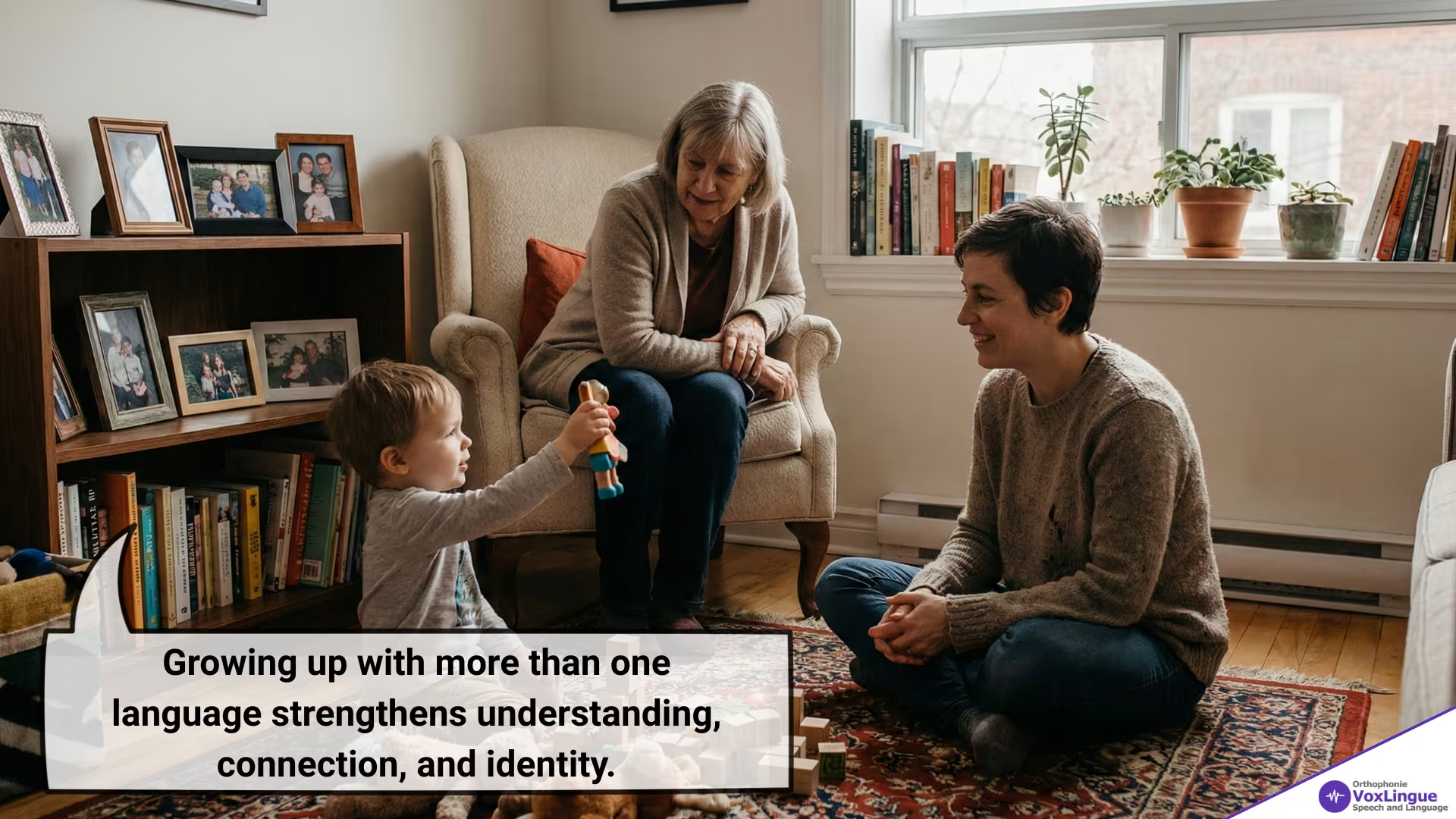
Multilingualism is a natural part of daily life for many families in Villeray. Children often hear and use more than one language across home, school, and community settings. French and English frequently coexist in daily routines, and many households also maintain heritage languages that reflect family history and cultural identity. This rich linguistic environment shapes how children understand language, express themselves, and navigate social interactions.
In multilingual homes, children learn early that language serves different purposes depending on context. A child may use one language to speak with a parent, another at school, and yet another with grandparents or community members. This flexibility supports strong listening skills and social awareness, even when expressive language develops unevenly across languages. It is common for vocabulary and sentence structure to differ between languages, especially in early childhood.
Parents often encounter myths about bilingualism that can create unnecessary worry. One common concern is the belief that exposure to multiple languages causes confusion or delays. Research and clinical experience consistently show that learning more than one language does not cause speech or language disorders. When delays are present, they appear across all languages a child uses, not because of bilingual exposure but due to underlying communication differences.
Multilingual development may look different from monolingual development in several expected ways:
These patterns reflect how the brain organizes language and are not signs of difficulty.
Understanding multilingual development requires looking at the whole child rather than comparing language use to monolingual norms. When communication questions arise, it is important to consider how a child understands and uses all of their languages together. For families seeking deeper insight into bilingual language development, this article on raising bilingual children and speech and language development provides additional context grounded in clinical practice.
Recognizing multilingualism as a strength helps families support communication growth with confidence. When children are encouraged to use all of their languages meaningfully, they are better equipped to connect with others and participate fully in their community.
At some point, many families notice differences in how communication looks across situations or over time. These observations are a natural part of paying attention to development and do not automatically signal a concern. Understanding what to watch for and how to interpret changes can help families respond thoughtfully rather than react with worry.
One common source of confusion is the difference between speech clarity and language understanding. A child may speak with unclear sounds yet follow instructions, understand stories, and respond appropriately in conversation. Another child may speak clearly but have difficulty understanding questions or expressing ideas. These patterns involve different aspects of communication and are interpreted differently from a clinical perspective.
Communication also varies across environments. It is common for children to communicate differently at home than at school or daycare. Familiar routines and people often support more confident expression, while group settings may require additional listening, attention, and social navigation. Differences across environments provide valuable information and are often more meaningful than behavior observed in only one setting.

Families may also wonder whether social communication differences reflect personality or something more. Some children are naturally reserved, prefer observing before joining, or need more time to warm up in new situations. Others seek interaction easily. Distinguishing between temperament and communication challenges involves looking at how a child responds to support, whether they understand social cues, and how they communicate intent over time.
Communication questions are not limited to childhood. Adults may notice changes in word finding, attention, or conversational ease during periods of stress, fatigue, health changes, or life transitions. Noticing these shifts early allows for reflection and adjustment rather than dismissal.
Speaking with a qualified professional does not require certainty or urgency. An early conversation can help clarify what is typical, what may benefit from monitoring, and what supports are available if needed. Approaching communication questions with curiosity and observation creates space for informed decisions grounded in understanding rather than fear.
Speech therapy is often associated with correcting specific difficulties, yet in practice it is best understood as a process of support, observation, and education that connects closely to everyday life. Communication does not exist in isolation, and therapy reflects this by looking beyond speech sounds alone.
Speech therapists pay attention to how communication functions in real situations. This includes how a child understands language, how they use gestures or facial expressions, how they take turns in conversation, and how they respond to others. For adults, it may involve listening to how ideas are organized, how language supports problem solving, or how communication changes under stress or fatigue. These observations help place communication within a broader picture rather than focusing on isolated skills.
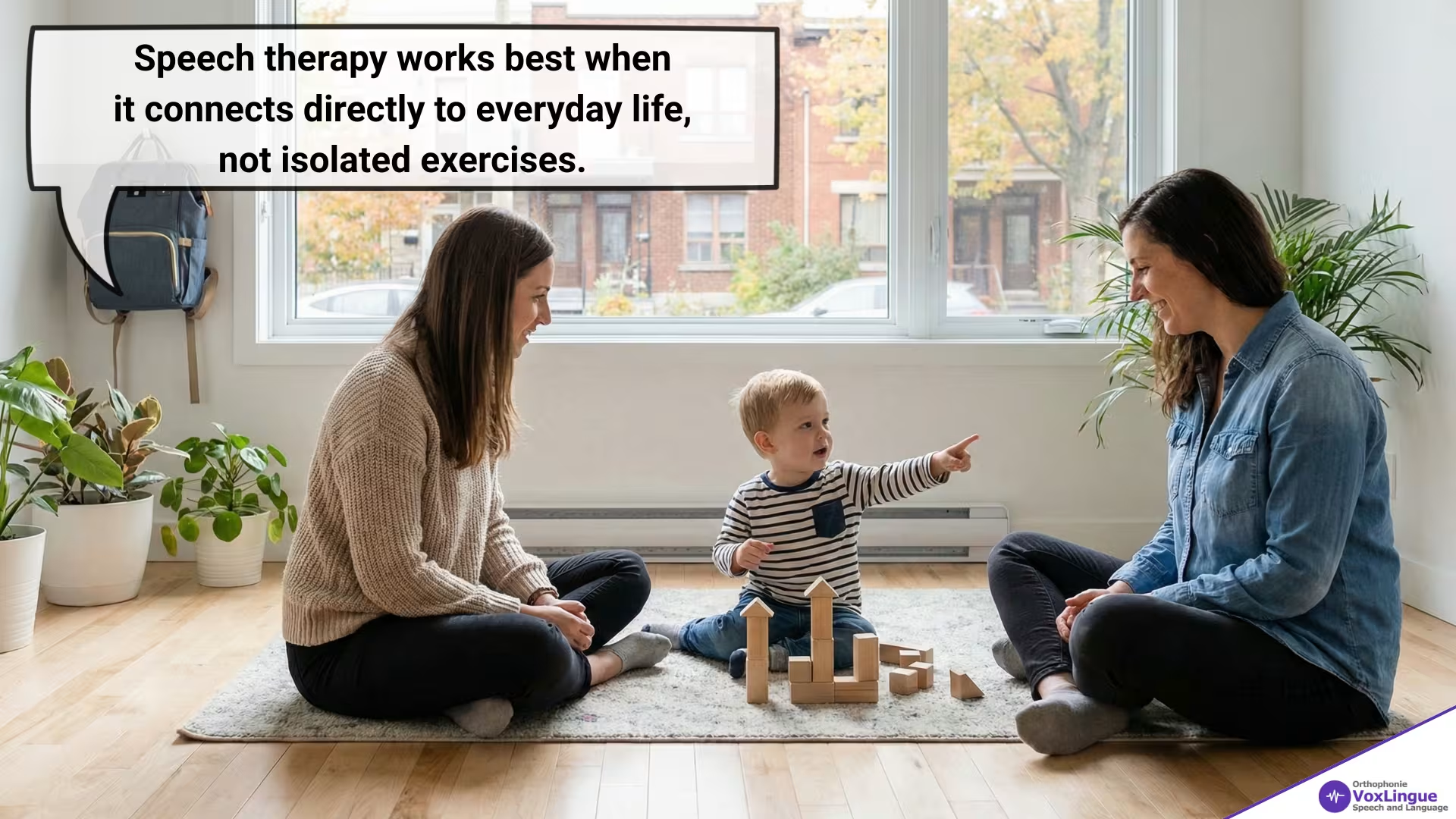
Therapy is most meaningful when it connects to daily routines and familiar environments. Skills practiced in sessions are linked to moments such as getting ready in the morning, playing with siblings, participating in classroom activities, or navigating conversations at work. This approach helps communication strategies feel relevant and usable rather than artificial or disconnected from real life.
Collaboration with families is central to this process. Rather than correcting behavior, speech therapy aims to support understanding and build confidence. Families are encouraged to notice what already works, adjust interactions gently, and create opportunities for communication that fit naturally into their routines. This collaborative approach helps reduce pressure and supports lasting progress.
Speech therapy can support individuals across the lifespan. Children may benefit from support as language and social demands increase. Teenagers may need guidance as communication becomes more complex and socially nuanced. Adults may seek support for changes related to health, work demands, or life transitions. In all cases, therapy is shaped around participation in everyday life rather than isolated goals.
For families who want to better understand how speech and language are evaluated within this broader context, information about the assessment process is available here: https://www.voxlingue.com/assessment
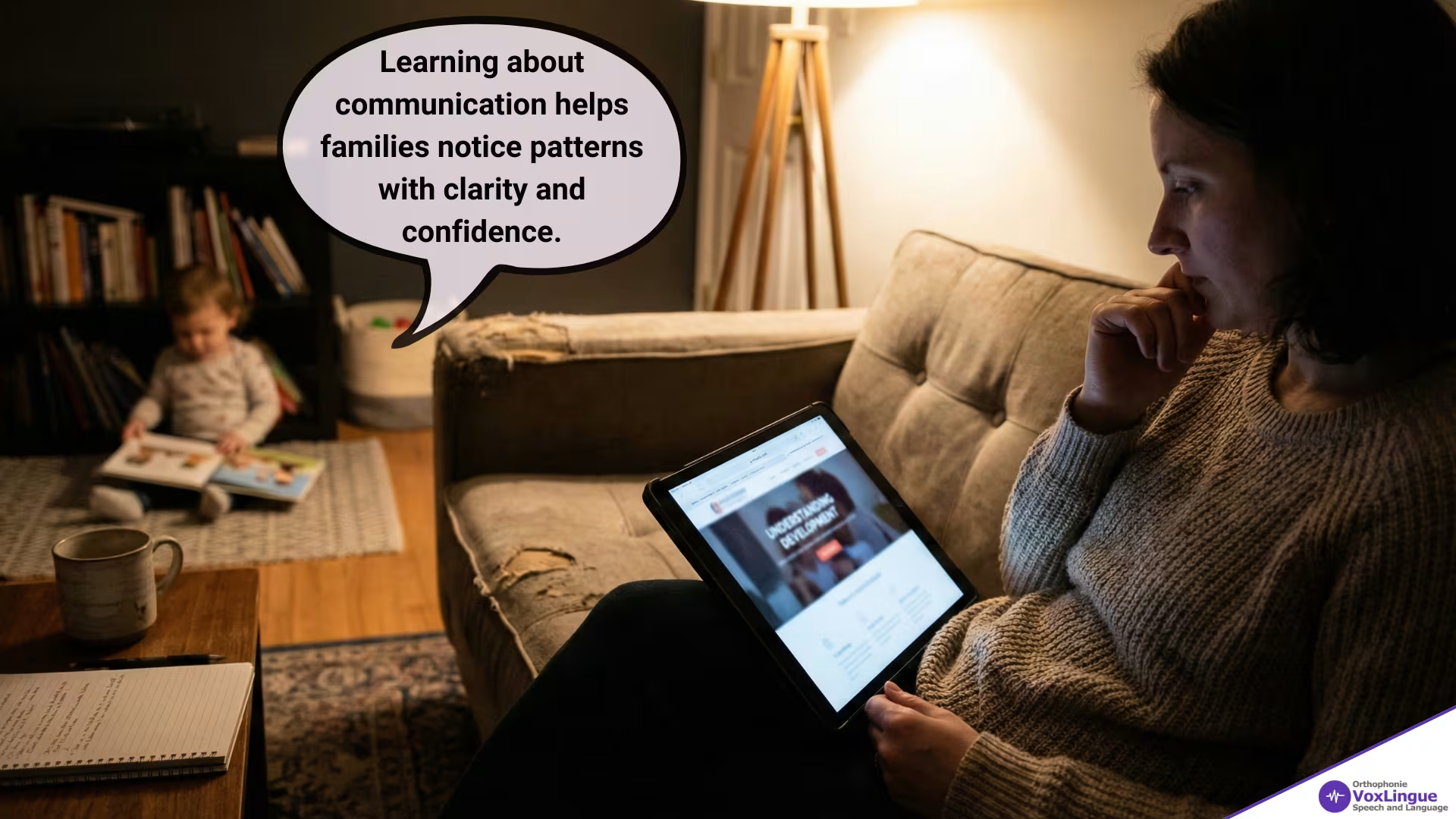
Many families find it helpful to continue learning about communication development at their own pace. Access to clear and credible information can support reflection, reduce uncertainty, and help parents feel more confident in understanding what they observe in daily life. Education is often the first step in making sense of communication patterns before any decisions are made.
Reading evidence informed articles can help clarify how speech and language typically develop, what variability looks like, and how communication connects to learning, social interaction, and emotional regulation. For families who want to explore these topics further, the VoxLingue blog offers a wide range of educational articles written from a clinical perspective and grounded in everyday experience. You can explore these resources here: https://www.voxlingue.com/blog
Some readers may also appreciate a broader overview of how speech therapy fits into the Montreal context, including common reasons families seek support and how communication needs evolve across the lifespan. This article on speech therapy in Montreal provides that wider perspective: https://www.voxlingue.com/post/montreal-speech-therapy
When looking for trustworthy information, it is important to rely on professional and regulated sources. In Quebec, the Ordre des orthophonistes et audiologistes du Québec is the regulatory body that oversees the profession and provides public information about speech language pathology. Their website offers guidance that reflects current standards of practice and professional ethics: https://ordreorthophonistes.qc.ca
Taking time to learn, reflect, and ask questions helps families approach communication development with understanding and confidence. Reliable resources can support informed conversations and thoughtful next steps when needed.
Communication develops through everyday life. In a neighborhood like Villeray, where families walk together, children play in shared spaces, and conversations unfold across languages and generations, communication is shaped long before any questions arise. These daily experiences provide the foundation for how people listen, express themselves, and connect with others.
Differences in communication are a natural part of development. When viewed in context, they offer meaningful insight rather than immediate cause for concern. Understanding how environment, routine, and relationships influence communication helps families interpret what they observe with clarity and perspective.

Education plays a central role in this process. Learning about typical communication development, multilingual realities, and the range of normal variability empowers individuals to make informed decisions. It also supports thoughtful conversations when guidance is needed, grounded in understanding rather than urgency.
Speech therapy fits within this broader journey as one source of support among many. When approached as part of community life, communication development becomes less about fixing and more about understanding, supporting, and strengthening connection across the lifespan.