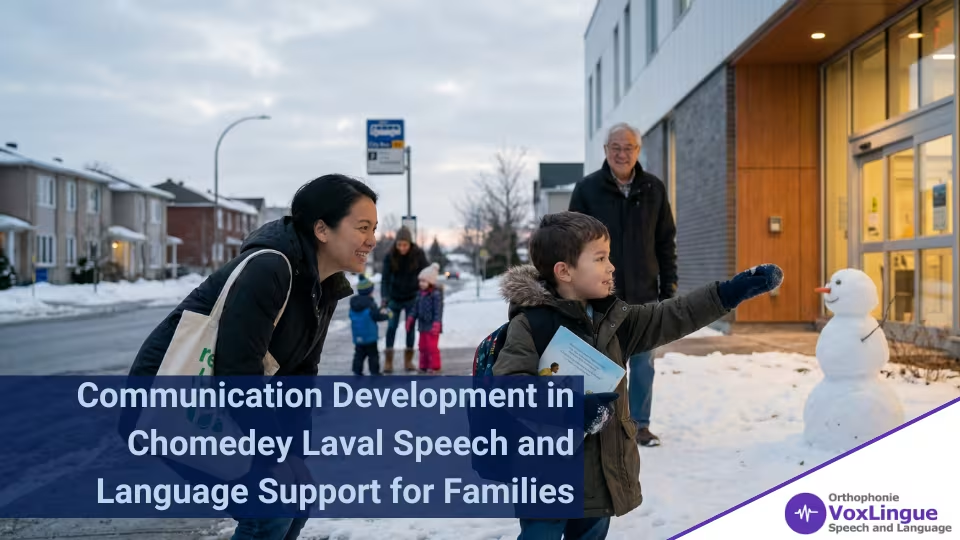
Communication is built in everyday life. It grows during routines like getting ready for school, eating meals together, walking to a bus stop, or chatting on the way to an activity. These moments shape how children learn to take turns, follow another person’s attention, express needs, and build relationships. In speech therapy, we care about these real contexts because they show how communication works outside of structured tasks.
Chomedey is a helpful place to explore this idea because it is a district of Laval that sits close to Montreal and reflects a wide mix of families, languages, and daily rhythms. Many households navigate more than one language across generations, which means children often learn to communicate across different voices, expectations, and settings. That variety can be a strength for development, and it can also raise thoughtful questions for parents about what is typical and what might need support. If you want a quick snapshot of the area’s background, you can read more about Chomedey here: Chomedey in Laval.
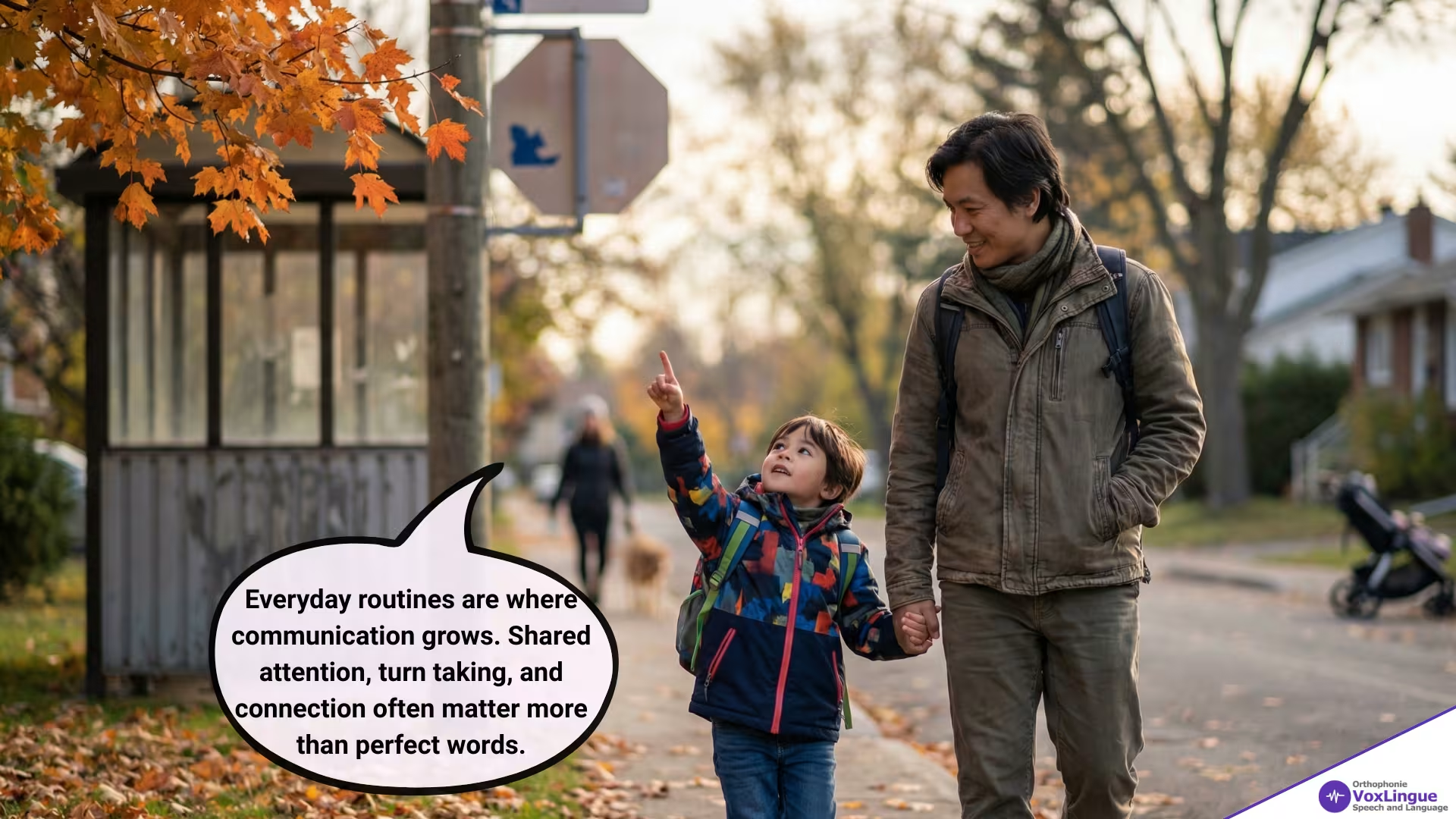
A key point for families is that differences in communication do not automatically mean something is wrong. Children develop at different paces, and the way they communicate can change depending on who they are with and where they are. The goal is not to label quickly. It is to understand what your child is communicating today, what is helping them connect, and what may be getting in the way. When parents and clinicians take that broader view, support becomes less about pressure and more about building clarity, confidence, and connection in the places that matter most.
In many Chomedey households, language is not a single track. A child may hear one language at home, another at daycare or school, and a mix of both with friends, neighbors, and extended family. Some families switch languages depending on the topic, the person, or the setting. Others keep one language for home routines and another for community life. This is a normal and meaningful part of development in a multicultural area like Chomedey, and it is also one of the reasons parents sometimes wonder whether their child is developing speech and language skills in the expected way.
A common concern is the idea that learning two or more languages might confuse a child or cause speech and language difficulties. Research and clinical experience consistently support the opposite message: learning multiple languages does not cause a speech or language disorder. Children’s brains are built to learn patterns, including multiple sound systems, vocabularies, and grammatical rules. What often changes is how those skills show up across contexts. Bilingual and multilingual development can look different from what parents expect if they are comparing their child to a monolingual pattern.
Here are a few patterns that are often typical in multilingual development and can be reassuring when seen in context:
When a family has questions, a thoughtful approach is to look at the whole communication profile rather than counting words in one language only. A well designed speech and language assessment takes language exposure history into account and helps clarify whether a child is developing skills in a way that fits their environment.
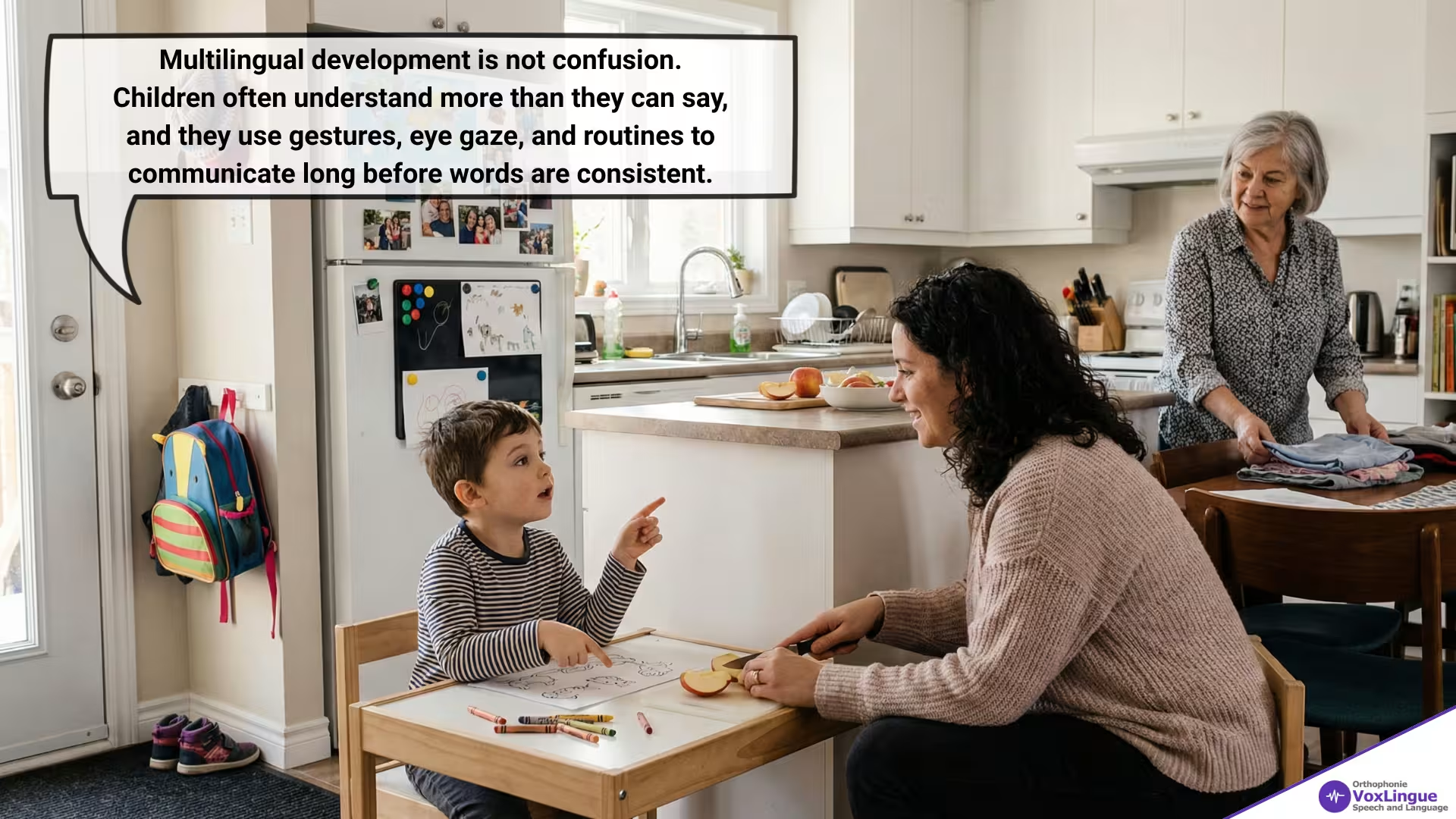
Communication is not just a skill a child carries inside them. It is something that happens between people, and the environment can make it easier or harder to participate. Some places naturally invite conversation, pretend play, and storytelling. Other settings are busy, time sensitive, and more directive. Chomedey includes both, which means the same child can seem very different depending on where they are and who they are with.
This is one reason parents sometimes receive mixed feedback. A child might appear highly talkative at home but become quiet in a crowded public place. A teen might communicate smoothly with friends but struggle when they have to explain ideas clearly in the classroom. An adult might speak confidently in familiar routines but find it harder to find words under stress, fatigue, or time pressure.
Seeing these differences as information is often more helpful than seeing them as a sign that something is wrong. Context can change communication for many reasons, including attention demands, noise level, social expectations, and emotional load. When you notice a pattern, it can help to ask a few simple questions:
In which settings does communication feel easiest for my child, and why might that be
What changes when the environment becomes faster, louder, or less predictable
Is my child communicating differently, or are they communicating less because participation feels harder
When families reflect on context, they often discover practical ways to support communication without turning daily life into a set of drills. Small changes like slowing the pace, offering a predictable routine for transitions, or creating short moments of shared attention can make communication easier across many settings.
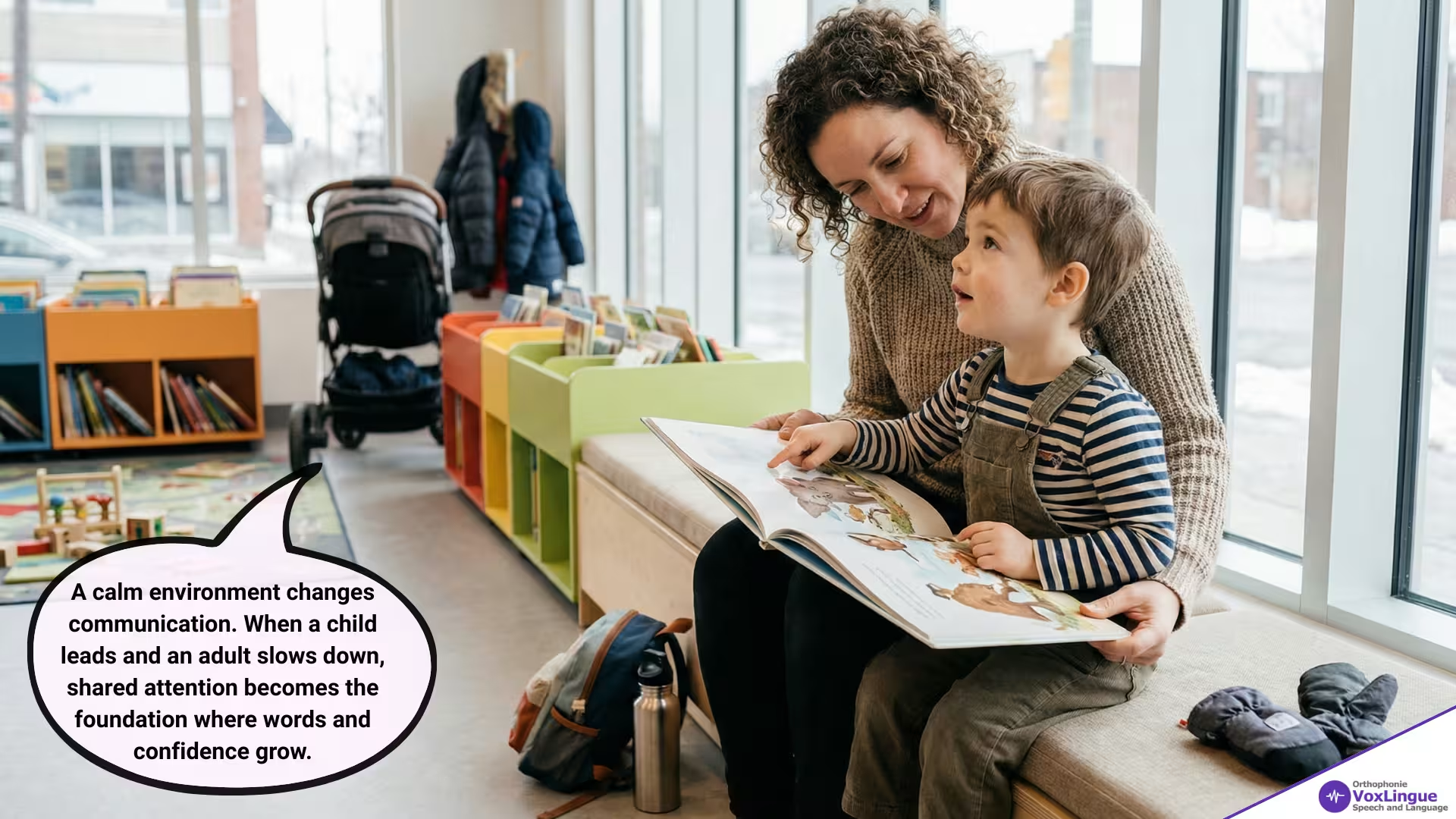
Libraries are one of the most supportive environments for communication because they naturally slow the pace. There is less pressure to perform, fewer competing demands, and more opportunities for shared attention. When a parent and child look at the same book, notice the same picture, or wonder about the same story, they are practicing one of the most important foundations for language development: staying connected around a shared topic long enough for learning to happen.
Chomedey families now have access to a newly opened neighborhood library, Bibliothèque Joséphine Marchand, which opened on April 22, 2025 as part of Laval’s renewal of local libraries. Even one short library visit can become a meaningful language routine, especially when the goal is connection rather than getting through a long list of books.
Here is a simple mini guide you can use on almost any library visit, even with a child who is not talking much yet.
If you want practical details about the location and services, you can find the official page here: Bibliothèque Joséphine Marchand.
Outdoor play is often discussed as a way to build vocabulary, but its bigger value is the way it teaches communication skills that live underneath words. In parks and play spaces, children practice turn taking, negotiation, flexible thinking, and emotional language. They learn how to read a situation, enter an activity, and adjust when something does not go as planned. Those are real communication demands, and they matter just as much as learning new words.
If you watch children at a park, you can often see communication developing in patterns that are easy to miss at home. A child might spend time watching before joining, which is often a thoughtful step rather than avoidance. They may share attention by pointing to something interesting or bringing an object to show you. They may use small requests like again, help, my turn, or look, which are powerful because they change what is happening in the moment. They may also try to repair misunderstandings, such as repeating a message, changing the gesture, or looking to an adult for support when a peer does not understand.
Outdoor play also brings up frustration, and that can be surprisingly useful. The skills involved in calming down, re entering play, and trying again are tightly connected to communication. When a child learns phrases that match their feelings, like not fair, I want a turn, or can I play, they gain tools that reduce conflict and increase participation.
Many families in Laval move between neighborhoods for parks, green spaces, and activities, which means children often practice communication in a variety of social groups and settings. That variety can strengthen adaptability, especially when parents stay close enough to support entry into play without taking over.
Family outings are excellent for communication because they create real reasons to talk, plan, ask questions, and retell experiences afterward. In Chomedey and nearby areas, destinations like Centropolis and the Cosmodome are common choices for families and school age children. Centropolis is widely promoted as a major attraction in Laval and often draws visitors for activities and events. The Cosmodome is designed around interactive experiences that invite children to explore, ask questions, and talk about what they noticed, which makes it a natural fit for language practice.
The most helpful part is that you do not need to turn an outing into a lesson. Instead, choose one or two communication challenges that fit your child’s age and temperament.
Planning with a simple sequence can help children organize language and expectations, such as first we arrive, then we choose, then we do the activity, then we go home. Ordering a snack or asking a staff member a simple question helps children practice functional language that transfers into daily life. Retelling the outing afterward supports narrative skills, which are essential for school success. A simple structure like beginning, middle, end can be enough, especially when you model it first.
If you want ideas for what is happening at Centropolis, Tourisme Laval’s page is a helpful reference: Centropolis. If your family is curious about space themed activities, the Cosmodome site outlines options and formats: Cosmodome.
Many parents understandably focus on words. How many words does my child say. Are the words clear. Are they speaking as much as other children their age. In speech therapy, we pay attention to words too, but we also look closely at the skills that come before words and make language possible. These foundations often show up during play, routines, and everyday conversations, even when speech is still emerging.
One of the most important building blocks is shared attention, also called joint attention. This is the ability to focus on the same thing as another person and to share that experience back and forth. A child might look where you point, bring you a toy to show you, or glance at your face to see if you noticed something interesting. These moments may feel small, but they are powerful because they show that your child is learning how communication works between people. When joint attention is strong, children often learn words and social communication more easily because they are tuned into what others are doing and thinking.
Gestures and nonverbal communication are another foundation we watch closely. Pointing, showing, giving, waving, nodding, facial expressions, and eye gaze are all forms of communication. They tell us that a child understands that messages can be shared, even when speech is not yet clear. For some children, gestures are a bridge to spoken language. For others, gestures remain an important tool alongside words, especially when they are tired, excited, or overwhelmed.

Turn taking is also central. In everyday life, communication is a rhythm. One person acts, the other responds, and the interaction continues. A toddler might take turns making sounds, rolling a ball, or trading toys. A school age child might take turns telling parts of a story or responding to questions. Turn taking helps children learn timing, listening, and social connection. It also reduces pressure because participation does not always require perfect words. It requires being present and responding in some way.
Understanding language, sometimes called receptive language, is often a quieter skill that can be easy to miss. A child may understand routines, follow directions, recognize familiar words, and respond to questions even if they are not speaking much. We look at how a child understands in real situations, not only in a testing format. For example, do they understand when you say get your shoes, come here, or show me. Do they follow simple instructions during play. Do they respond to their name and to common questions like where or what.
Play skills are another major window into communication. Pretend play, flexible play, and problem solving with others all involve planning, perspective taking, and symbolic thinking. When a child makes a toy figure eat pretend food or turns a block into a phone, they are practicing the same mental skills that later support storytelling, grammar, and more complex language. When children play with others, they practice negotiation, repair, and social language. Those are communication skills in action.
When families understand these building blocks, it becomes easier to see progress that does not show up as clear speech yet. It also helps parents know what to encourage at home, because supporting communication is often more about building connection and responsiveness than pushing for specific words.
Speech and language are related, but they are not the same thing. Speech refers to how sounds are produced and how clear words are to the listener. Language refers to the system of meaning, including vocabulary, grammar, understanding, and the ability to put ideas together in a way that makes sense to others. A child can have strong language with unclear speech, or clear speech with weaker language skills. Knowing the difference helps families describe concerns more accurately and helps professionals choose the right support.
In real life, families often notice patterns like these.
The practical takeaway is that communication concerns often have more than one layer. Clarity is one layer, but so is comprehension, vocabulary, sentence structure, social interaction, and confidence across settings. Support becomes most effective when it matches the underlying skill. That is why speech therapists spend time observing everyday communication and not only counting words or listening for specific sounds.
If you are curious about how therapy goals are typically built around these foundations, you can read more about speech and language treatment.
Many families notice something small first. A child who speaks less in groups. A toddler who becomes upset when they cannot get a message across. A teacher comment about participation during circle time. These observations do not automatically mean there is a problem, and they also do not need to be ignored. An assessment can be a helpful next step when you want clarity, especially if you are noticing a pattern over time.
It can be worth exploring support when you notice one or more of the following consistently, across weeks and in more than one setting.
A useful way to think about this is to focus on function. Is your child able to participate in daily life in a way that feels comfortable and successful for them. If communication challenges are limiting play, learning, friendships, or confidence, an assessment can help identify what is happening and what supports might reduce that load.
Families often feel relieved once they understand what an assessment actually looks like. In most cases, it is not a single test where a child either passes or fails. It is a guided process of gathering information so a clinician can understand strengths, challenges, and the reasons behind what you are seeing at home or at school.

A speech and language assessment usually includes a combination of observation, conversation, and structured activities when appropriate. For young children, play based interaction is often the most informative, because it shows how a child communicates naturally, how they respond to another person, and how they use gestures, sounds, words, and social skills in real time. For school age children and teens, an assessment may include activities that look at vocabulary, sentence structure, storytelling, understanding, and how ideas are organized. For adults, it may focus on clarity, voice, fluency, language, or cognitive communication skills depending on the concern.
Caregiver input is essential. Parents know what communication looks like across mornings, transitions, mealtimes, play, and community outings. Sharing examples of what feels easy and what feels hard can guide the clinician toward the most meaningful questions.
In a community like Chomedey, where many families are bilingual or multilingual, clinicians also consider language exposure history as part of the assessment. That includes which languages are used with which people, how much exposure occurs in each language, and what communication looks like across settings. Rather than judging one language in isolation, the goal is to understand the whole communication profile and how your child is using their skills to connect with the people around them.
The outcome of an assessment is typically a clear summary of strengths, areas to support, and practical next steps. Even when therapy is not recommended, families often leave with a better understanding of development and concrete strategies that make everyday communication feel easier.
Speech therapy is most helpful when it connects to real life. Families do not live in therapy rooms. They live in routines, transitions, school days, errands, and community outings. For that reason, a strong approach to support focuses on skills that can be practiced in the moments you already have, without turning home into homework.
In person sessions can be valuable because they allow a clinician to see how communication works in real interaction. They also allow for hands on coaching with parents and caregivers, so strategies feel natural and doable. The real progress often comes from carryover, meaning small changes in how communication is supported between sessions. Carryover is not about doing more. It is about doing a few things with intention.
Here are examples of what that can look like across ages.
For toddlers, daily routines are often the best therapy space. Snack time, bath time, and getting dressed provide repeated opportunities for the same words and the same turn taking patterns. A toddler does not need long conversations. They benefit from predictable language, short back and forth exchanges, and playful pauses where they can take a turn. A parent might model one or two key words like more, open, help, or all done, then wait for a look, a gesture, a sound, or a word. Over time, these repeated moments help build early communication without pressure.
For school age children, language demands shift. Many children can speak clearly but still struggle with storytelling, explaining, or understanding complex instructions. Carryover at this age often looks like supporting narrative and classroom language skills during everyday conversation. A parent might help a child retell a school event using a simple structure like what happened first, then, and finally. Another helpful routine is to practice explaining, such as tell me how you built that, or explain why you chose that answer. These prompts build organization and clarity.

For teens, communication support often focuses on independence. Teens may need help organizing ideas, advocating for themselves, and navigating social situations that require flexible language. Carryover might include practicing how to ask for clarification, how to express disagreement respectfully, or how to summarize an idea clearly before a presentation. For some teens, the goal is not more talking. It is clearer talking in the moments that matter.
For adults, goals can vary widely. Some adults seek support for clarity and confidence in professional settings. Others want help with word finding, public speaking comfort, or cognitive communication skills such as organizing thoughts and remembering key points. Carryover can be built into daily life through small practices like preparing a short summary before a meeting, using a structured checklist for phone calls, or practicing a clear message in a low stress setting before a high stress conversation.
Across all ages, the common thread is that communication improves when the environment becomes supportive. That can mean slowing the pace, giving time to respond, and choosing one small goal that fits your family’s rhythm.
Telepractice can be a practical option for families who need flexibility. It is not the right fit for every goal or every child, but it can be very effective for many types of support, especially when attention and engagement can be maintained through a screen and when caregivers can participate directly.
In areas like Chomedey, many families balance commuting patterns across Laval and Montreal. Winter travel can add another layer of complexity with weather, traffic, and schedule disruptions. Telepractice can reduce missed sessions by making support accessible from home, which can help maintain consistency over time.
Telepractice often works well when goals involve language organization, storytelling, social communication coaching, parent guidance, and skill building that can be practiced in home routines. For some children, being at home can actually increase comfort and participation. For others, in person sessions provide better engagement. The most helpful mindset is to see telepractice as one format within a range of options, chosen based on what helps a child or adult participate most successfully.
If you would like to understand how this format works and what it can support, you can read more about telepractice speech therapy.
Mixing languages is often a normal and practical strategy in multilingual development. Children choose the words that come most easily in the moment, especially when a topic is strongly connected to one environment. School words may come more easily in the language used at school. Family routine words may come more easily in the language used at home. Over time, many children become more skilled at selecting the language that matches the listener, but it is common for mixing to appear along the way.
What matters most is not whether a child mixes languages occasionally. The more useful questions are whether communication is progressing, whether the child can participate in daily life, and whether they can get their message across in the settings that matter to them. If your child is building new words, combining ideas more often, understanding more, and interacting more comfortably over time, mixing languages is usually not a concern.
If you are unsure, a helpful approach is to observe function. Does your child communicate effectively at home. Do they communicate in community settings. Do they show growth across months. A child can mix languages and still have strong communication. A child can also use one language only and still need support. The pattern matters more than the label.
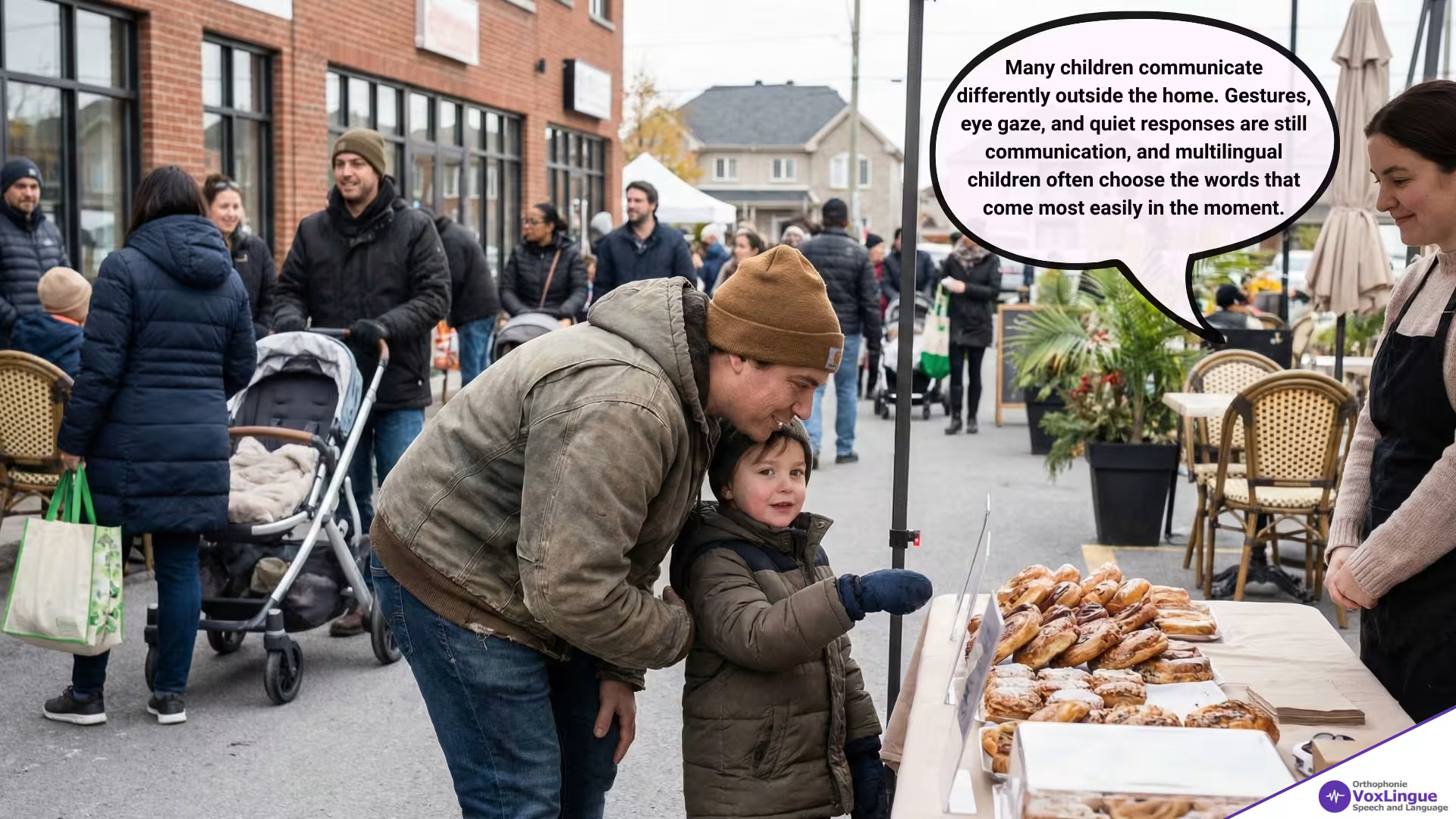
It is common for children to communicate differently depending on the setting. Home is familiar. The people are predictable. Routines are known. Outside the home, the world becomes louder, faster, and socially more complex. A child may speak less in public because they are processing more sensory information, because they feel shy, because they are not sure what is expected, or because the social demands are higher with unfamiliar people.
This does not always indicate a disorder. It can be a sign that your child is cautious, observant, or sensitive to noise and attention. It can also be a sign that your child needs more support to generalize communication skills across environments.
When deciding whether to explore support, it can help to watch for patterns like these.
If your child is comfortable at home and is still connecting with others outside the home through gestures and shared attention, this may simply be a context effect that improves gradually. If your child seems consistently stuck, distressed, or unable to participate in school or social settings, it can be worth discussing with a professional. The goal is not to force speech. It is to help your child feel safe, understood, and able to participate.
Many parents worry that supporting communication means adding more tasks to already busy days. The good news is that some of the most effective support comes from small changes in how you interact, not from formal exercises.
A simple rule that works well for many families is to choose one moment each day where you slow down and follow your child’s lead. It might be during breakfast, bath time, the walk to the car, or a short play moment before bedtime. During that moment, aim for connection first and words second.
Connection first means you are present, responsive, and interested in what your child is focused on. Words second means you model language gently without pressuring your child to repeat. You can describe what they are doing, add a small expansion to what they say, and give them time to take a turn in any way that feels accessible. When this becomes a routine, children often communicate more because they feel understood and not tested.
Chomedey offers a rich environment for communication development because it reflects how many families actually live. People move between languages, between neighborhoods, and between different social settings across the week. Children learn to communicate with grandparents and siblings, with daycare educators and classmates, and with peers in community spaces. These daily experiences shape not only speech and language, but also confidence, flexibility, and social connection.
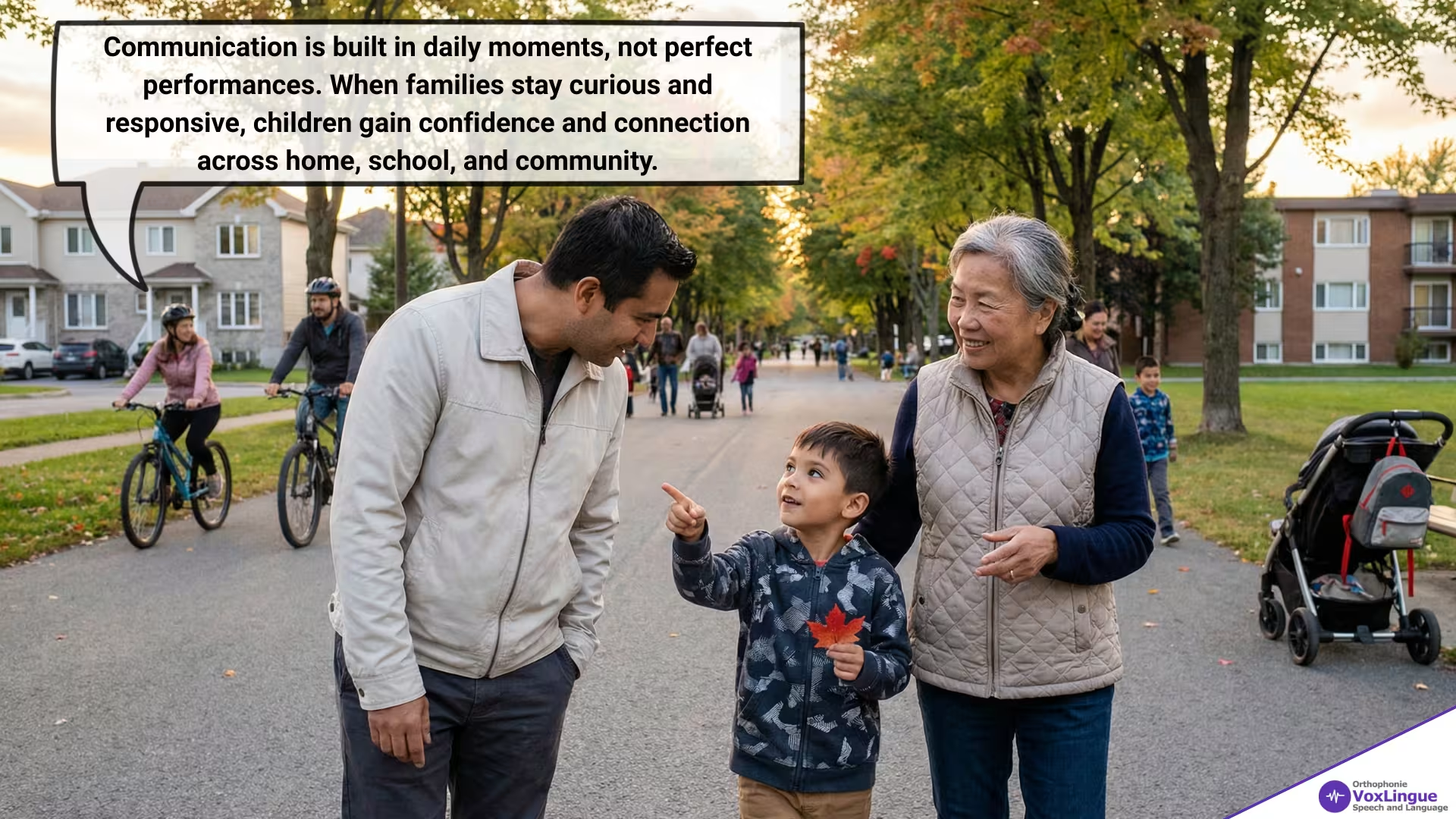
When parents notice patterns and stay curious, they often reduce stress for themselves and their children. Instead of asking what is wrong, they begin asking what helps my child communicate best, and what makes communication harder. That shift is powerful because it leads to practical support and realistic expectations.
Support should feel like understanding, not pressure. The goal is clearer connection at home, at school, and in the community.