Speech and Language Development in the Town of Mount Royal
Clinically reviewed by Kimberly Martins, M.A. CCC-SLP · · Editorial policy
Introduction
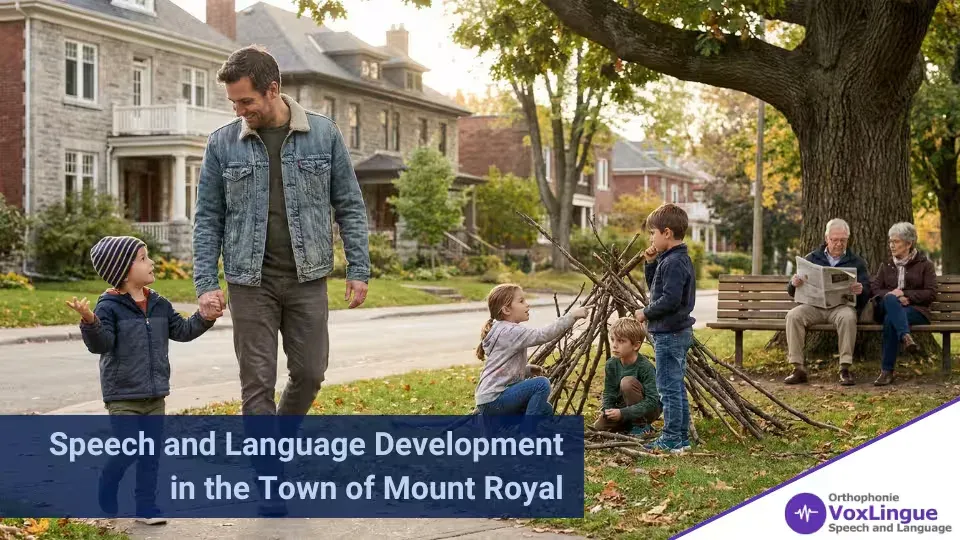
Life in the Town of Mount Royal often feels intentionally designed for families. Tree lined streets, walkable parks, neighborhood schools, and accessible community services shape daily routines in ways that naturally support interaction. These everyday environments influence how children and adults communicate, learn, and connect long before speech or language concerns are ever raised.
Communication development does not happen only in clinical settings. It is shaped through shared routines, conversations during walks, play at the park, classroom interactions, and multilingual exchanges at home and in the community. In a place like Town of Mount Royal, where daily life encourages connection and participation, these moments quietly support important communication skills across the lifespan.
This page explores how communication development fits into life in Town of Mount Royal. Rather than focusing only on speech therapy services, it looks at the broader context that surrounds families and individuals. Schools, green spaces, multilingual environments, and family centered living all contribute to how language and communication grow, adapt, and sometimes raise questions over time.
The Town of Mount Royal as a Communication Environment
The Town of Mount Royal is recognized as one of the first planned suburban communities in Canada. Its design was built around accessibility, shared spaces, and daily movement through the neighborhood. Sidewalks connect homes to schools. Parks sit at the center of residential areas. Recreation centers and community services are woven into everyday life. All of this creates frequent and natural opportunities for communication.
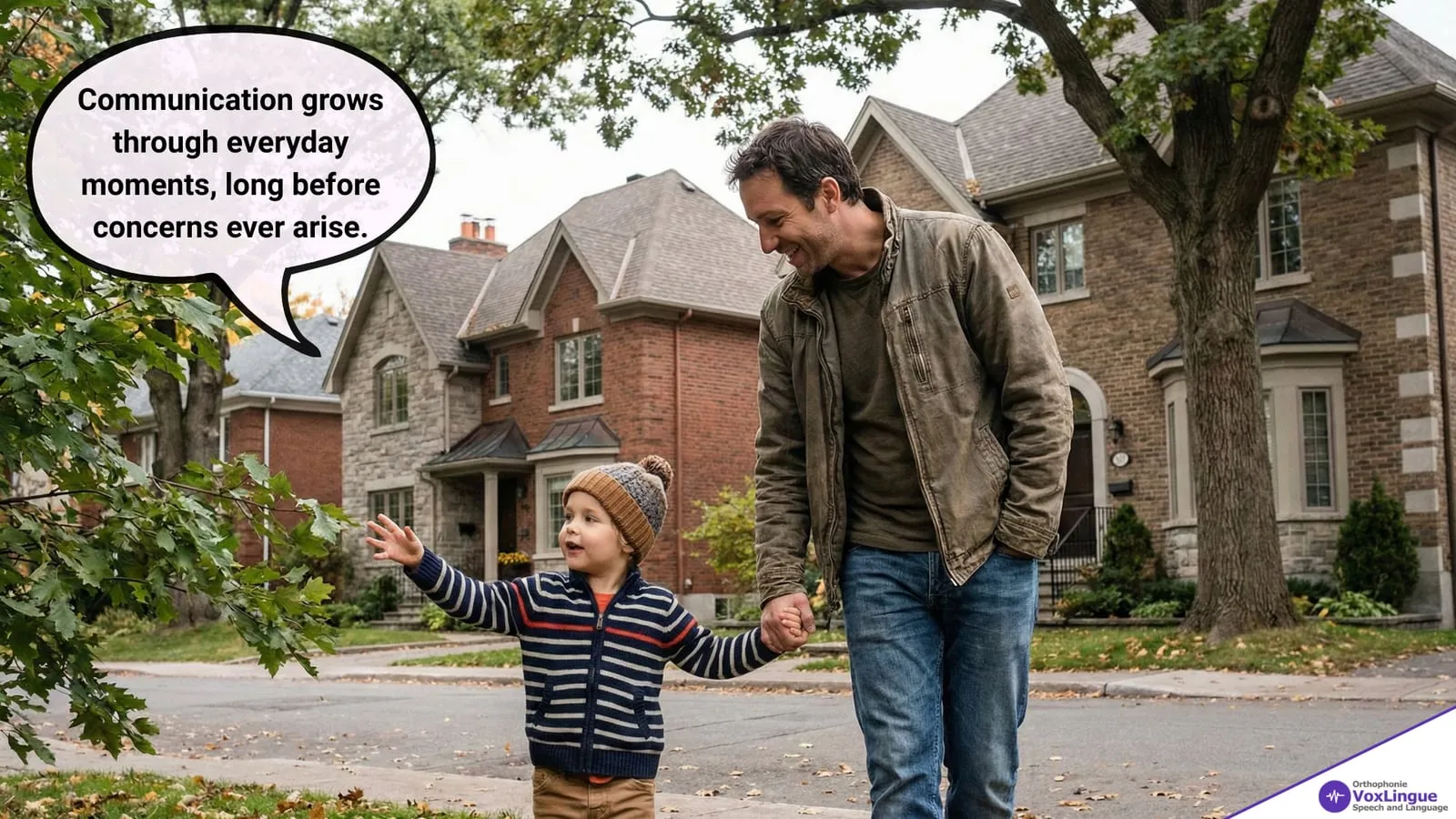
Everyday Communication Development in Town of Mount Royal Montreal
For children, this type of environment supports communication development in subtle but powerful ways. Daily interactions during walks to school, playtime at the park, or participation in community activities encourage skills such as taking turns in conversation, understanding and following directions, explaining ideas, and adjusting language based on who they are speaking with. These experiences help children learn that communication is not only about words, but also about timing, listening, and responding to others.
Adults also benefit from these communication rich environments. Professional settings, social gatherings, and community involvement often require flexible language use, clear expression of ideas, and effective listening. In a multilingual city like Montreal, adults in Town of Mount Royal may also regularly shift between languages depending on context, reinforcing the importance of cognitive flexibility and strong language foundations.
Understanding how a community supports communication helps explain why development does not look the same for every child or adult. Environment matters. Spaces that invite interaction provide daily practice opportunities that shape communication skills long before formal concerns arise.
For more information about the community itself, families can visit the Official Town of Mount Royal website.
Growing Up Multilingual in the Town of Mount Royal
The Town of Mount Royal reflects the linguistic diversity that defines Montreal. Many families regularly use more than one language at home, in childcare settings, at school, and within the community. Exposure to English and French is common, and some families also maintain additional heritage languages. This rich language environment shapes how children listen, learn, and express themselves from a very young age.
Multilingual language development follows well documented and predictable patterns, but it does not always resemble monolingual development. It is common for children to understand more than they are able to express in one language, especially during the early years. Some children may mix languages within the same sentence, use different vocabulary with different people, or appear more talkative in one environment than another. These patterns are typically part of normal multilingual learning and reflect the brain’s ability to manage multiple language systems.
Parents often worry that exposure to more than one language might cause confusion or delay. Research and clinical experience consistently show that multilingualism itself does not cause language disorders. Instead, it can offer cognitive and social benefits when development is supported appropriately. The key is understanding what is expected at different stages and recognizing when differences reflect variation rather than concern.
Learning how multilingual exposure influences communication helps families feel more confident in supporting their child’s language development. It also allows parents to better distinguish between typical multilingual patterns and situations that may benefit from closer monitoring or professional guidance.
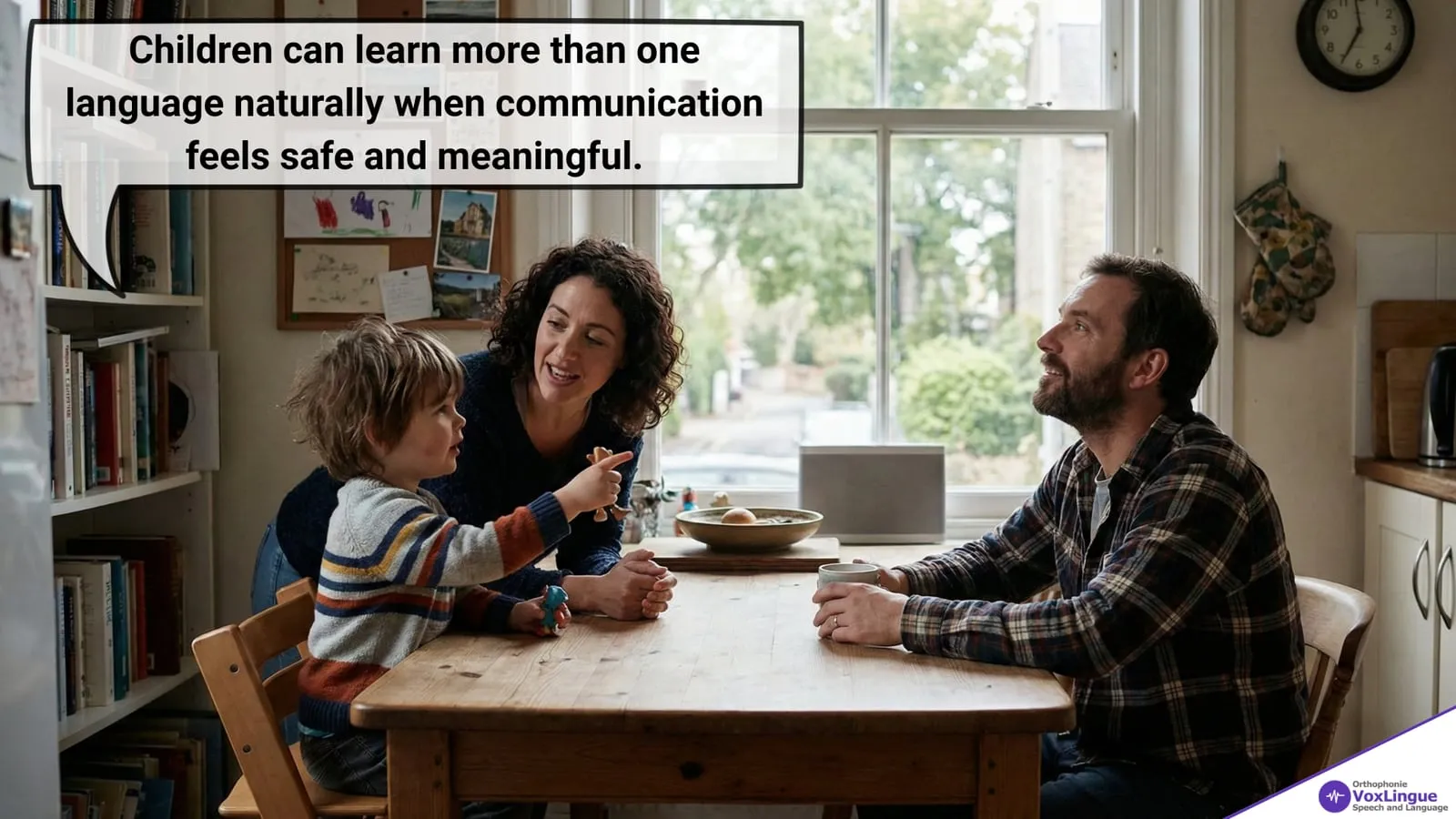
Multilingual Language Development in Town of Mount Royal Montreal
For families interested in a deeper exploration of this topic, the VoxLingue article on bilingualism and language development offers additional evidence based insights tailored to multilingual communities.
How Play and Community Spaces Support Communication
Public spaces play a meaningful role in how communication develops, especially in childhood. Parks, libraries, community centers, and sports facilities offer natural settings where language is used for real purposes. Children negotiate rules, explain ideas, ask questions, and respond to others in ways that feel motivating and low pressure. These interactions support vocabulary growth, social understanding, and emotional expression in ways that structured activities alone cannot.
Play based communication is particularly powerful because it combines movement, imagination, and interaction. During play, children learn to take turns, adjust their language based on their play partner, and use words to solve problems or express feelings. These skills form the foundation for later communication demands in school and social settings.
In and around the Town of Mount Royal, access to green spaces encourages unstructured play, which is especially valuable for younger children. At places like Mount Royal Park, children are free to explore, invent games, and interact with peers across different ages. This type of play allows children to practice communication skills such as:
• Explaining ideas and plans to others
• Negotiating roles and resolving small conflicts
• Using language to organize play sequences
• Interpreting social cues and adjusting responses
Unstructured environments reduce performance pressure and allow children to communicate at their own pace. For many children, especially those who are quieter or still developing expressive language, these spaces provide opportunities to build confidence and connection through interaction rather than instruction.
Families can learn more about the park and its role in the community by visiting the Mount Royal Park website.
Communication Development Across the Lifespan
Communication needs are not static. They evolve as individuals grow, learn, and move through different life stages. In early childhood, communication development is centered on understanding language, learning to express needs and ideas, and engaging in back and forth interaction. These early skills form the foundation for later learning and social participation.
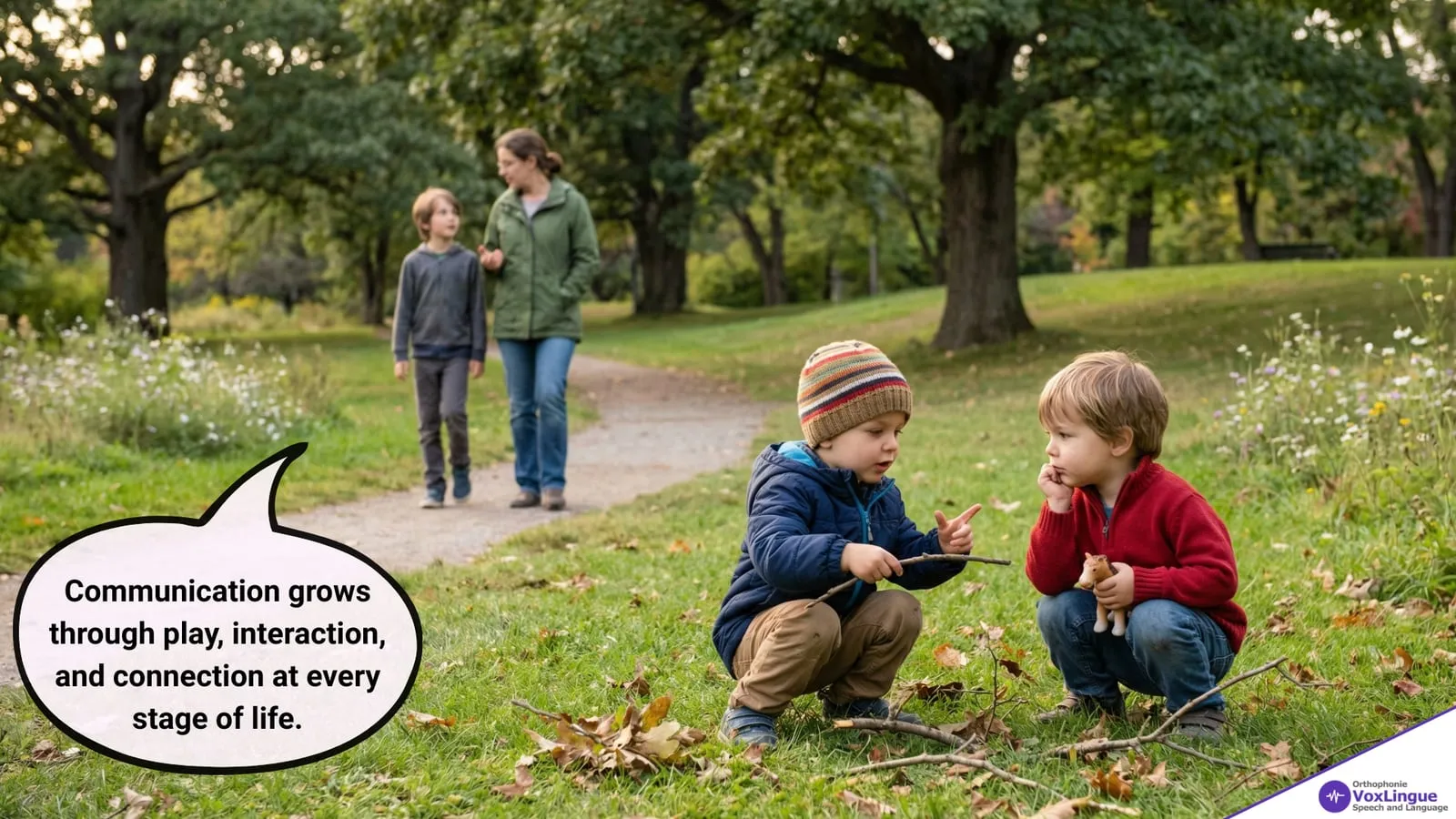
Play Based Communication Development in Town of Mount Royal Montreal
As children enter school age years, language demands become more complex. Communication is now closely tied to academic learning, literacy, and peer relationships. Children are expected to follow multi step instructions, understand abstract language, tell coherent stories, and use language to reason, explain, and collaborate. Subtle language difficulties can become more noticeable during this period because expectations increase, not because the child was previously doing something wrong.
Adolescents and adults face a different set of communication challenges. Academic settings, workplaces, and social environments require clarity, organization of ideas, and flexibility in language use. Communication may need to adapt to different audiences, emotional contexts, or cognitive demands. Life events such as stress, health changes, or neurological conditions can also affect how communication feels and functions over time.
Speech therapy is not limited to childhood. Adults may seek support for a variety of reasons, including changes following neurological events, voice concerns, cognitive communication challenges, or increasing professional communication demands. Understanding that communication evolves throughout life helps normalize the idea that support can be relevant at any age, depending on context and need.
For readers interested in a broader overview of how speech therapy applies at different stages of life, the VoxLingue article on speech therapy services across the lifespan provides additional educational context.
When Communication Differences Raise Questions
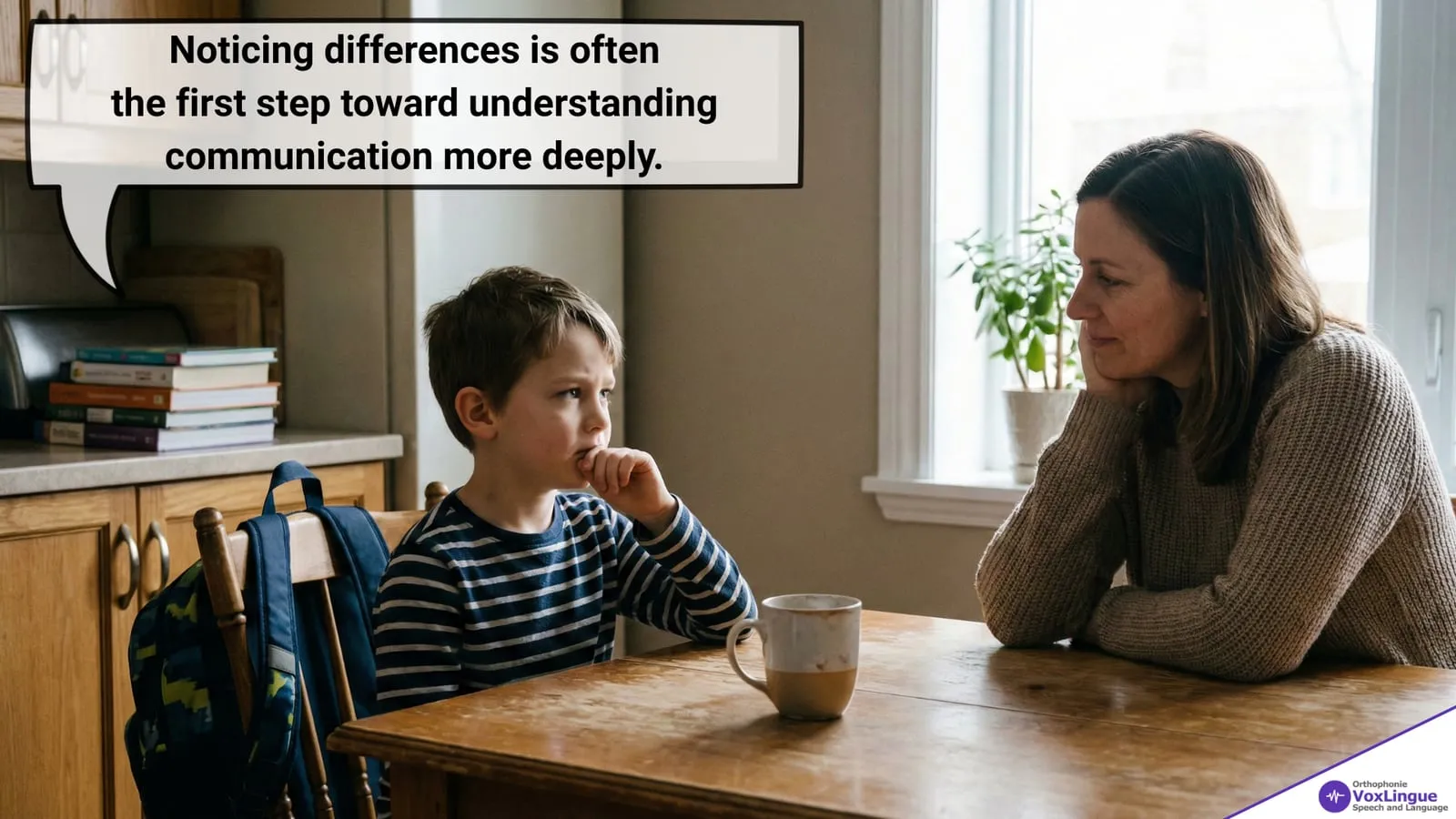
Parents and adults often notice communication differences during everyday routines. A child may seem to understand instructions at home but struggle in group settings. An adult may notice that finding the right word becomes harder during moments of stress or fatigue. In multilingual households, a child may speak less in one language at school than they do at home. These observations are common and understandably raise questions.
It is important to remember that communication does not develop in a straight line. Many differences reflect the interaction between a person’s abilities and their environment. Factors such as noise level, group size, emotional state, language exposure, and task complexity all influence how communication looks in a given moment. A change in setting can reveal challenges that were not previously noticeable, especially as expectations increase with age.
Some differences are part of typical development or multilingual learning. Others may benefit from closer observation over time. Education and context help families distinguish between variation and concern. Questions that often guide this reflection include:
• Does the difficulty appear across multiple settings or only in specific situations
• Has the pattern been consistent over time or is it changing
• Is the difference affecting learning, relationships, or daily participation
When Communication Differences Raise Questions in Town of Mount Royal Montreal
When questions persist or begin to interfere with daily life, a formal assessment can help clarify what is happening beneath the surface. An assessment looks beyond surface behaviors to understand how a person processes language, expresses ideas, and uses communication in real world contexts. Even when results fall within typical ranges, the process itself often provides reassurance and clearer guidance.
For families and adults who want to better understand this process, VoxLingue offers educational information about speech and language assessments and what they are designed to explore.
Community Resources That Support Learning and Language
The Town of Mount Royal offers a range of community resources that quietly support communication development at every stage of life. Access to libraries, recreational programs, and educational services creates environments where language is practiced naturally and meaningfully, outside of structured learning settings.
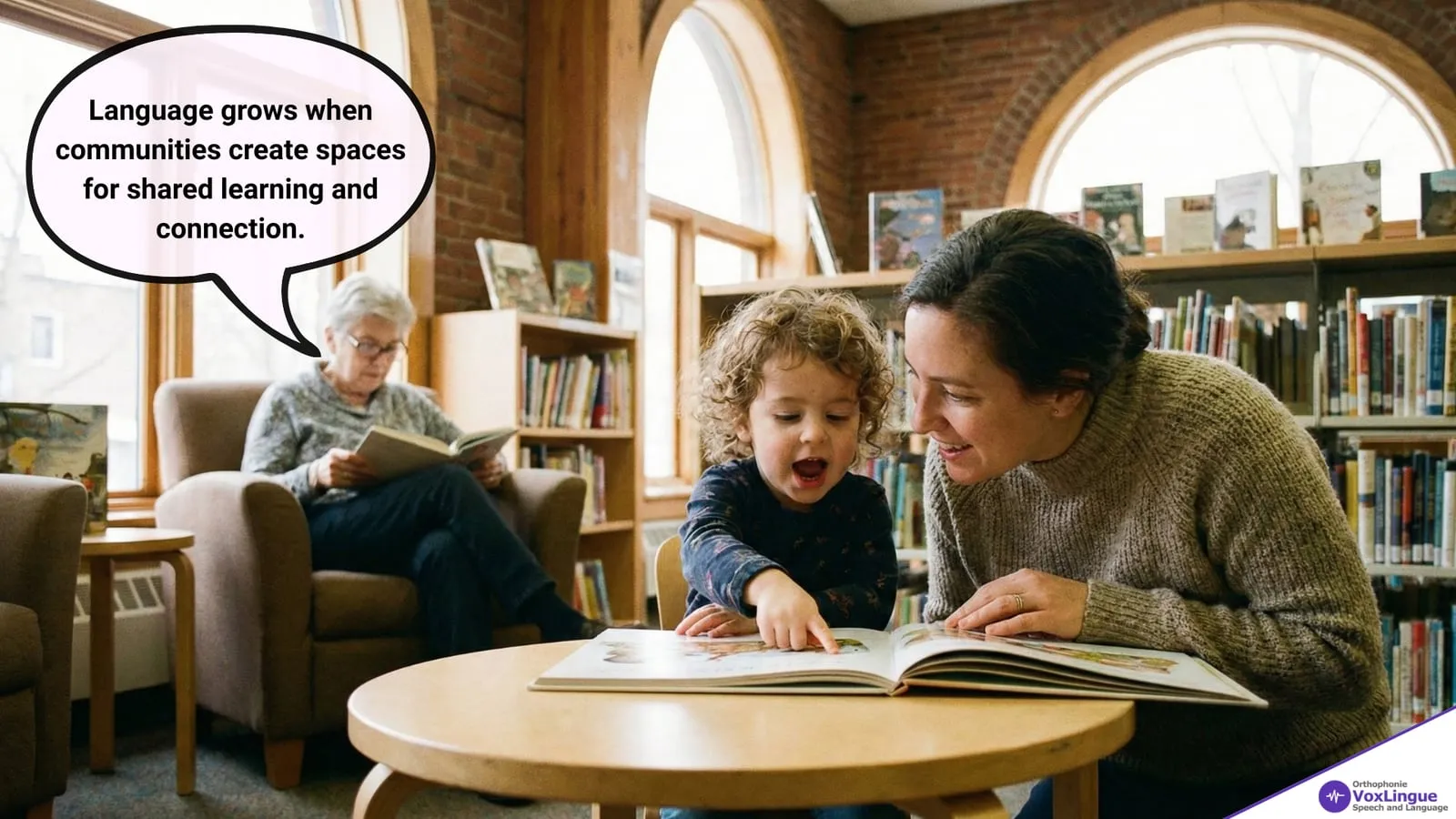
Libraries play an important role in early literacy and language exposure. Storytimes, shared reading, and access to books in multiple languages help children build vocabulary, listening skills, and narrative understanding. For older children and adults, libraries support learning through access to information, quiet study spaces, and community programs that encourage discussion and exploration of ideas.
Recreational programs also contribute to communication development. Sports teams, arts programs, and group activities provide opportunities to use language for cooperation, problem solving, and social connection. These settings encourage children to interpret instructions, negotiate roles, and express ideas within a group, all of which are essential communication skills.
Schools in and around Town of Mount Royal often work closely with families to support learning and communication goals. Classroom environments highlight the importance of following instructions, participating in discussions, and using language to organize thinking. When schools and families share observations and expectations, children benefit from consistent support across environments.
For families looking to explore local literacy and learning opportunities, the Montreal public library network offers access to resources and programs across the city that support language development in both children and adults.
Conclusion
Communication development does not happen in isolation. In the Town of Mount Royal, daily interactions are shaped by thoughtful urban design, multilingual exposure, strong educational institutions, and accessible community spaces. These elements work together to create an environment where communication is practiced naturally through everyday life.
Community Resources Supporting Language Development in Town of Mount Royal Montreal
Understanding how context influences speech and language helps families and adults feel more informed and confident. Differences in communication are often shaped by setting, expectations, and opportunities for interaction rather than by ability alone. When families view communication through this broader lens, it becomes easier to recognize what is typical, what may need support, and how to respond thoughtfully.
Whether monitoring early development, supporting learning during school years, or navigating communication changes later in life, context matters. Education, awareness, and community connection form the foundation of healthy communication at every stage.